Collection
Tulips Wall Art
Straight stems, closed cups — the most architectural flower
6 pieces in this collection



About Tulips Wall Art
The tulip is the flower for people who are not sure they want a flower. Straight stem, closed cup, no frills and almost no visual noise — it is closer to a piece of geometry than a rose or a peony will ever be, and that is precisely why it survives in interiors where other florals look out of place.
Why it suits a modern room
Because the shape is simple enough to be graphic. A tulip reduces cleanly: three or four lines and a filled oval, and it is still unmistakably a tulip. That means it can be drawn in a flat modern illustration style, or as a filigree silhouette on obsidian, without becoming an abstraction of something else.
Compare it to a rose, which has dozens of overlapping petals and therefore needs shading, softness and usually warmth to read at all. The tulip needs none of those.
The treatments here
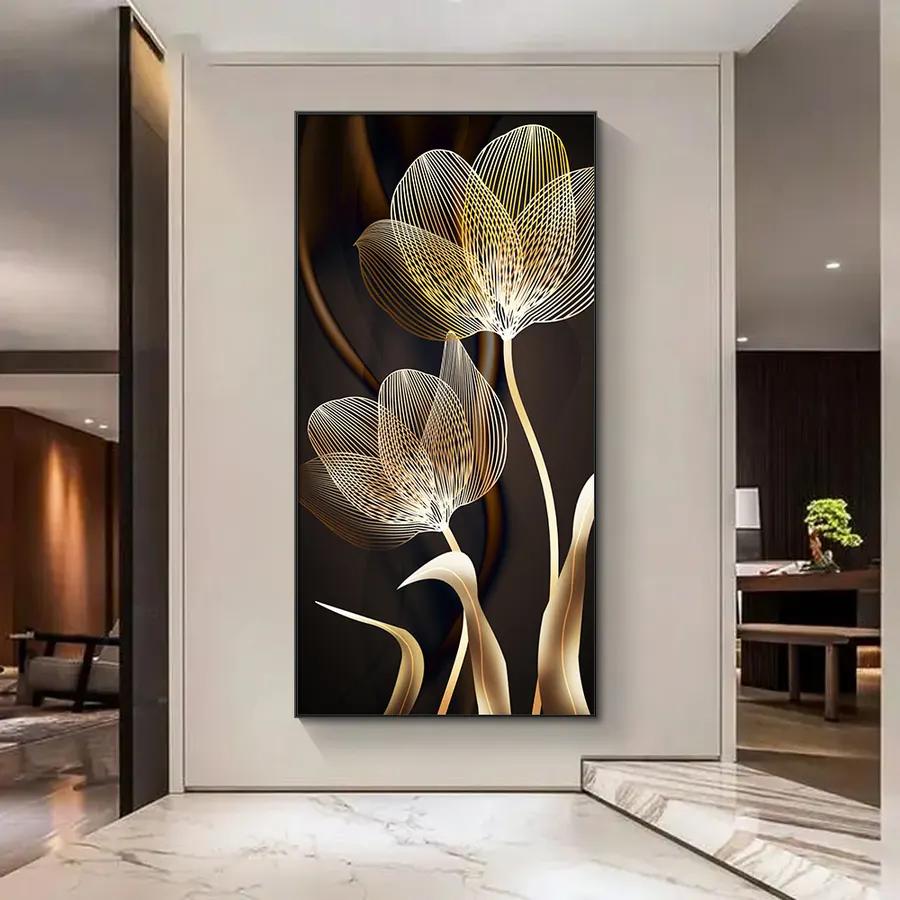
Filigree on dark ground is the most formal: gold or pale line work on obsidian or near-black, which reads as Art Deco as much as botanical and pairs happily with the geometric collection.
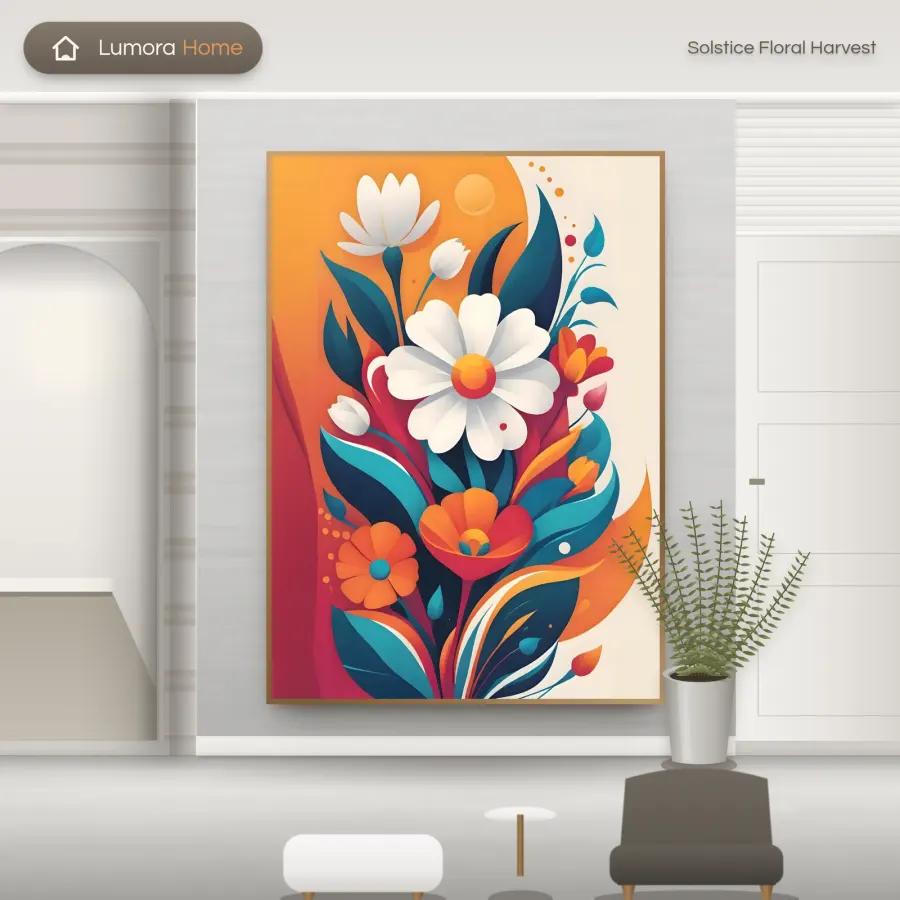
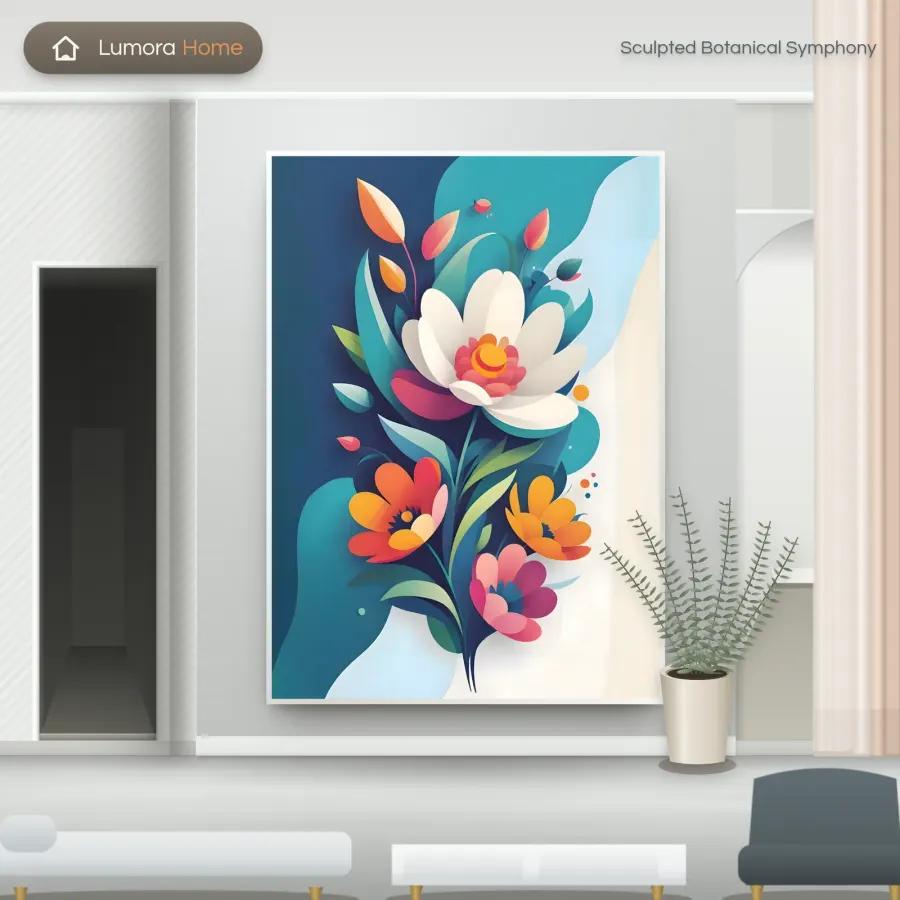
Flat illustration bouquets put tulips among other blooms in saturated hard-edged colour — kitchen and hallway pieces, built to be read from across a room.
Prism and faceted treatments break the cup into planes, which is the tulip meeting the geometric instinct halfway.
Where they belong
Minimal rooms, modern kitchens, hallways, and anywhere a floral is wanted without softness. They are one of very few flowers that works in a home office.
They also suit a north-facing room better than most florals, because the cool structural treatments do not depend on warm light the way a rose does.
Grouping
Tulips are excellent in threes — the vertical stems give you a repeating rhythm, and three narrow pieces in a row is one of the easiest gallery walls to get right, because the stems themselves supply the alignment.
Slim frames. Anything ornate fights the simplicity that made you choose the subject.