Collection
Rama Wall Art
The Kodanda bow, and duty carried to an unreasonable conclusion
9 pieces in this collection


About Rama Wall Art
Rama is the most serious of the Hindu deities to hang on a wall. Where Krishna is play and music and company, Rama is obligation — an ideal king who does the correct thing at consistently enormous personal cost. The imagery reflects it: upright, frontal, composed, and almost always armed.
The bow is the whole identification
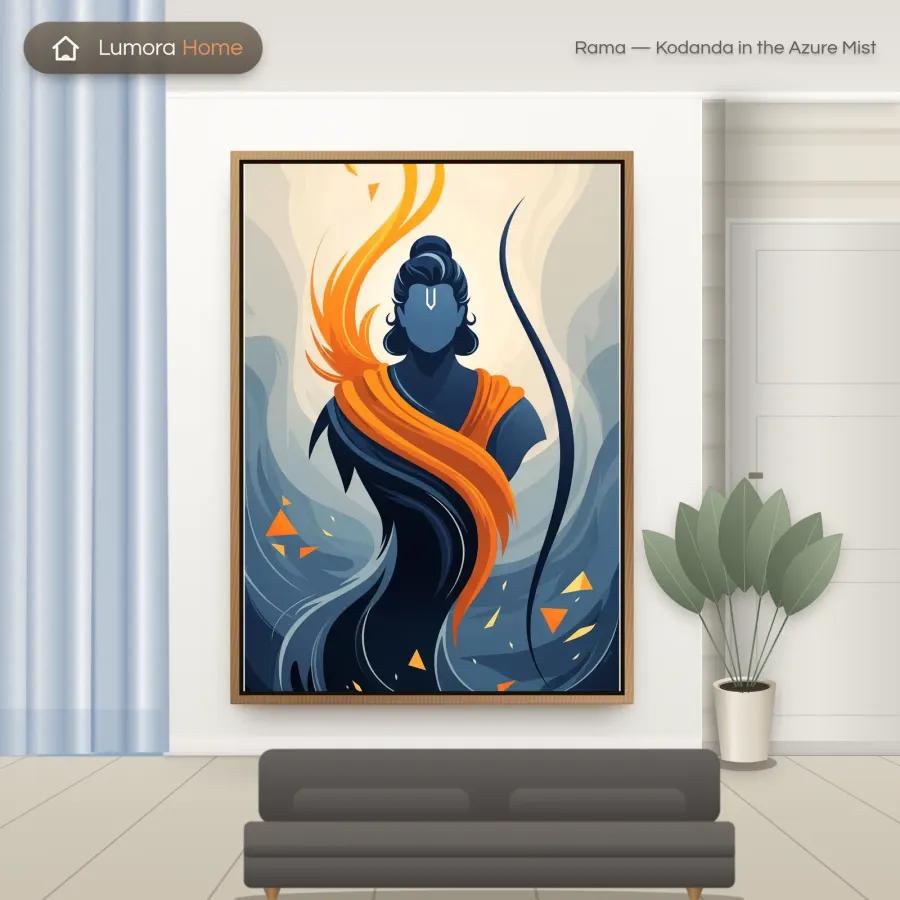
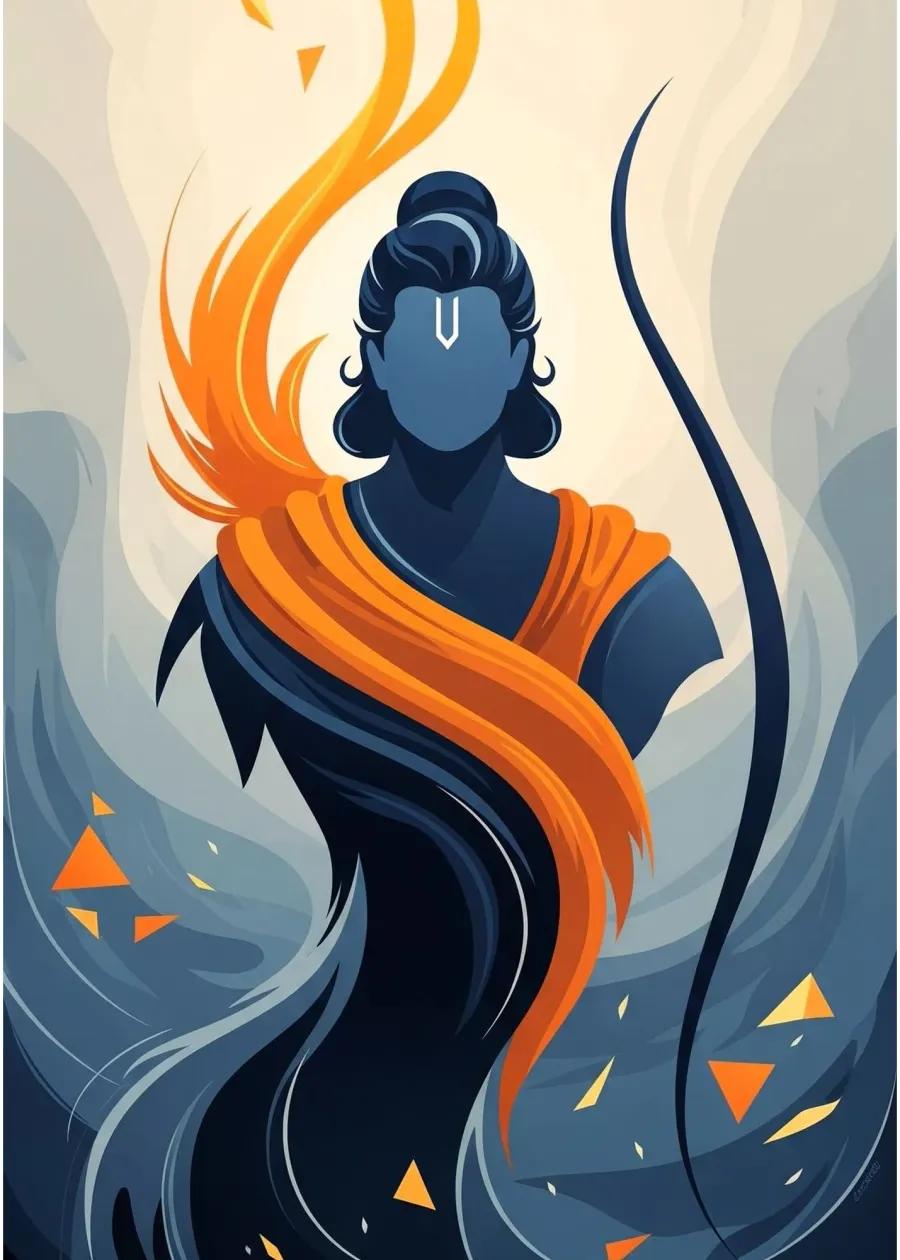
The Kodanda is how you know it is Rama. A blue-skinned figure with a bow is Rama; the same figure with a flute is Krishna, and that single object is the difference between the two most-reproduced deities in Hindu art. Once you have noticed it you cannot unnotice it.
The posture matters too. Rama is usually standing and still rather than seated or dancing, often with the bow held rather than drawn — readiness rather than action, which is the point of the character.
Why people choose it
Rama imagery is chosen for a household rather than for a room. The association is with duty, right conduct and steadiness under obligation, which is why it is a common choice for a family shrine, a study, or the wall of a home where those things are being deliberately kept in view. It is not a decorative pick, and treating it as one tends to disappoint.
The treatments here
The azure and mist palettes are contemporary — cooler and more atmospheric than traditional Rama iconography, which tends towards saturated primary colour and gold. They read as art rather than as devotional print, and they suit a study or a living room.
Placing them
At or above eye level, as with any deity, and ideally on an east-facing wall if that convention is observed in your household. Rama pieces are usually vertical, which makes them a good answer to the narrow wall beside a door or the gap between two windows.
They sit naturally alongside other Ramayana or Hindu subjects — Hanuman, Sita, Lakshmana — if you are building a set, and a single Rama is entirely comfortable on its own.