Collection
Radha Wall Art
Devotion rather than divinity — Radha with Krishna, and alone
6 pieces in this collection
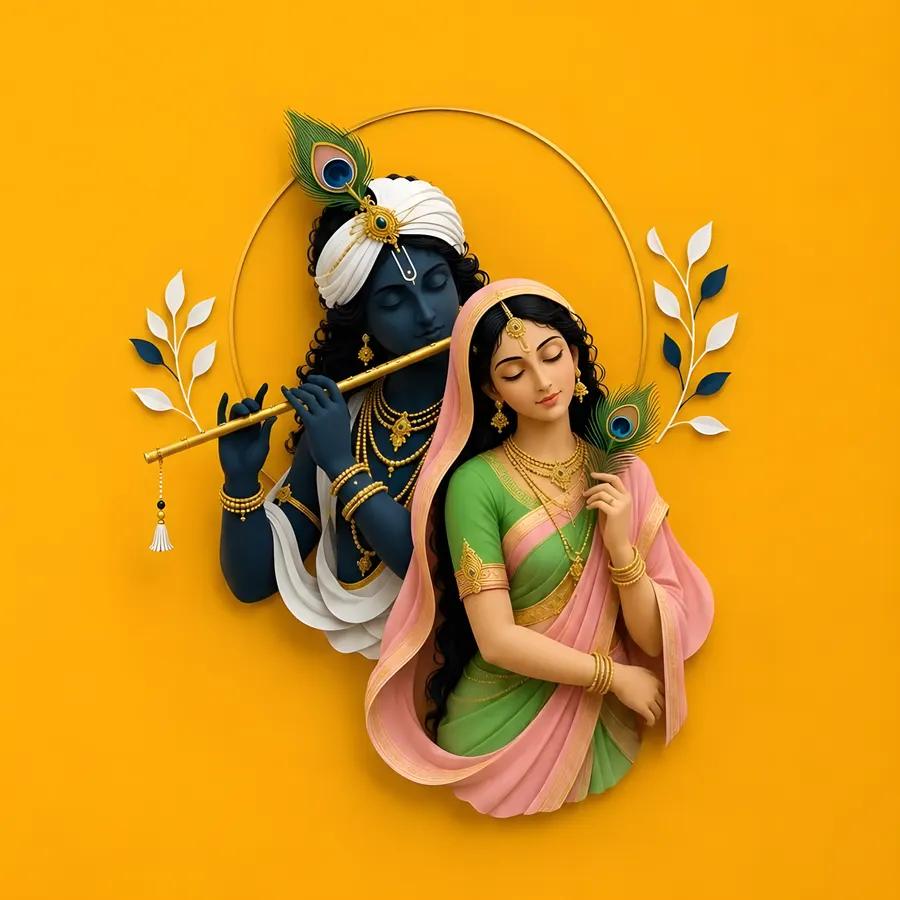

About Radha Wall Art
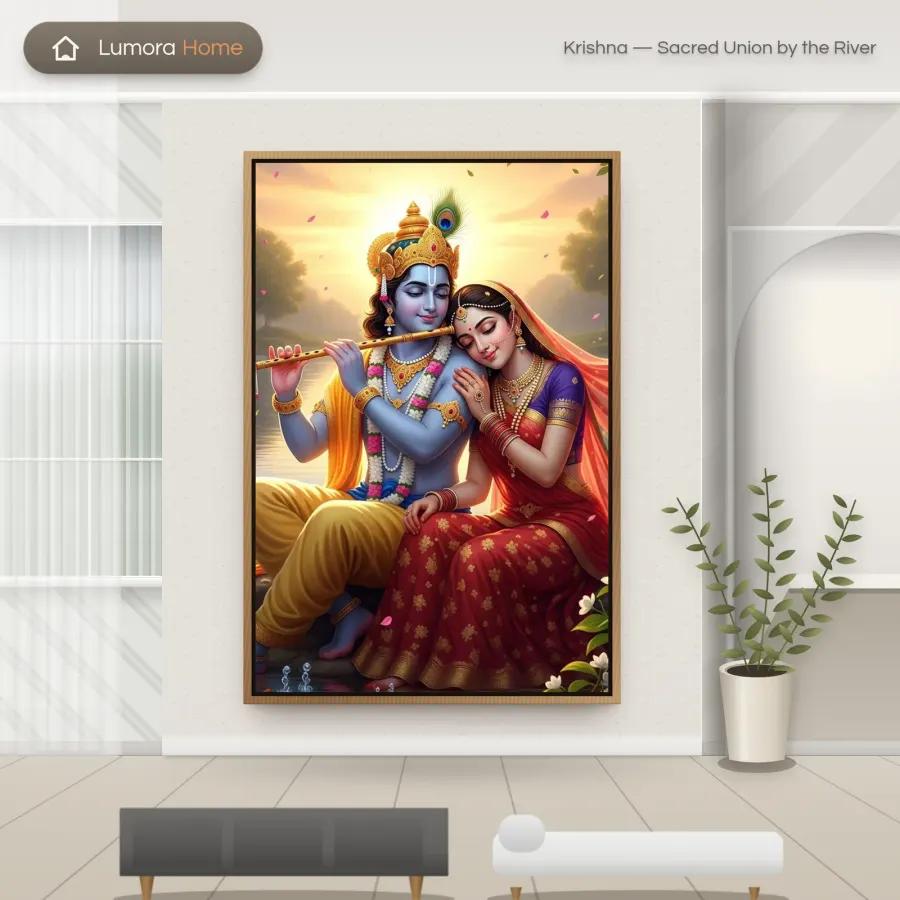
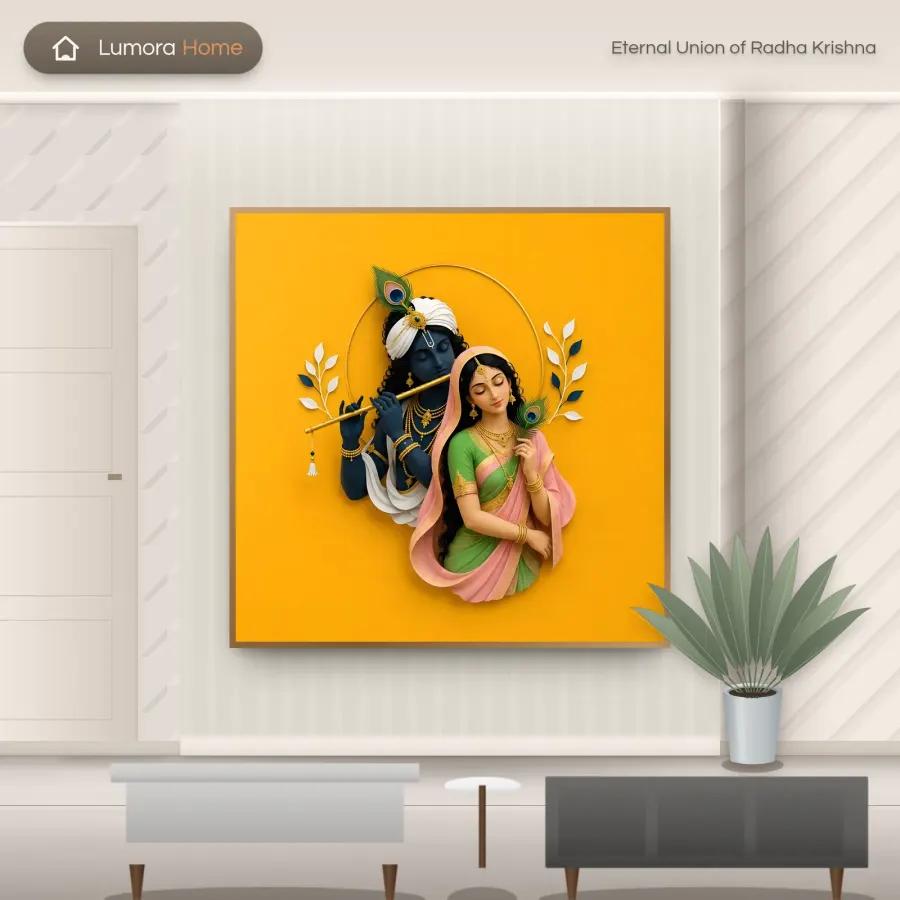
Radha changes what a Krishna image is about. Alone, Krishna is a deity — flute, peacock feather, cattle, the whole weight of the Vrindavan stories. With Radha beside him, the subject shifts from divinity to devotion, and the pairing is read as one thing rather than two figures.
Why the pairing means what it does
In the tradition Radha is not a consort in the ordinary sense; she is the soul in love with the divine, and the relationship is the model for devotion itself. That is why Radha Krishna imagery is the conventional choice for a bedroom or an entrance hall in Indian homes, where a solitary deity would be placed in a shrine instead. The picture is about union, so it goes where a household's own partnership lives.
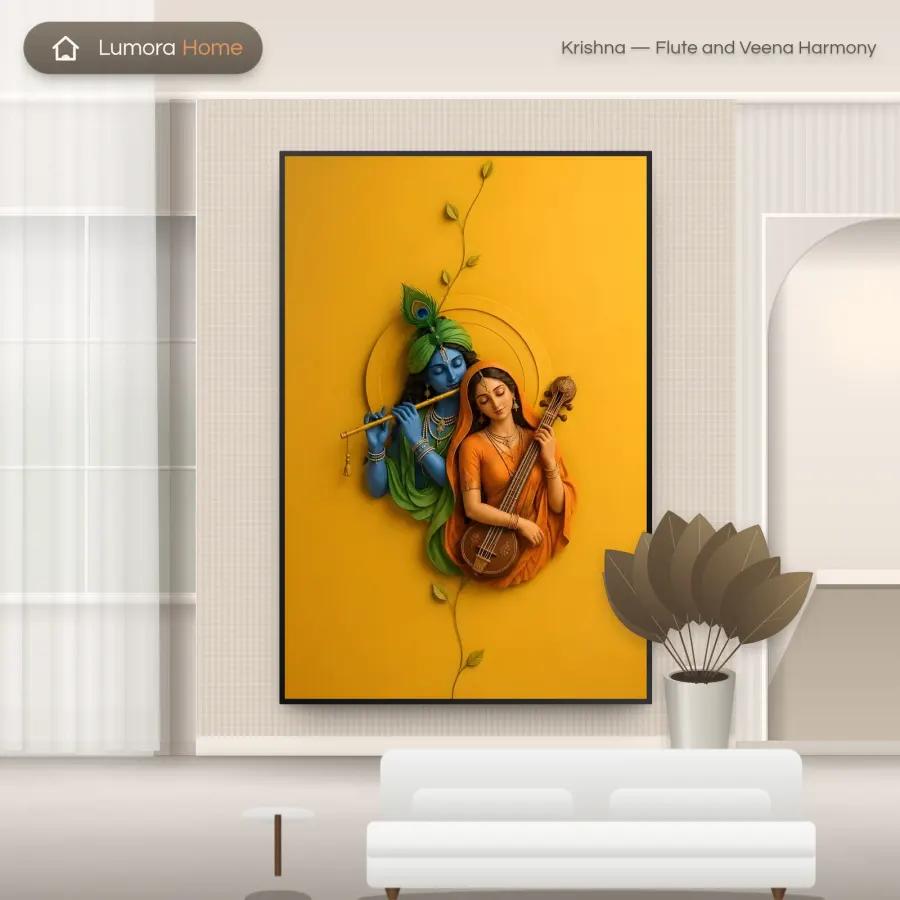
It is also why so many of these compositions are physically close — foreheads nearly touching, a shared glance, hands overlapping on a flute. The intimacy is the subject.
What to look for in the imagery
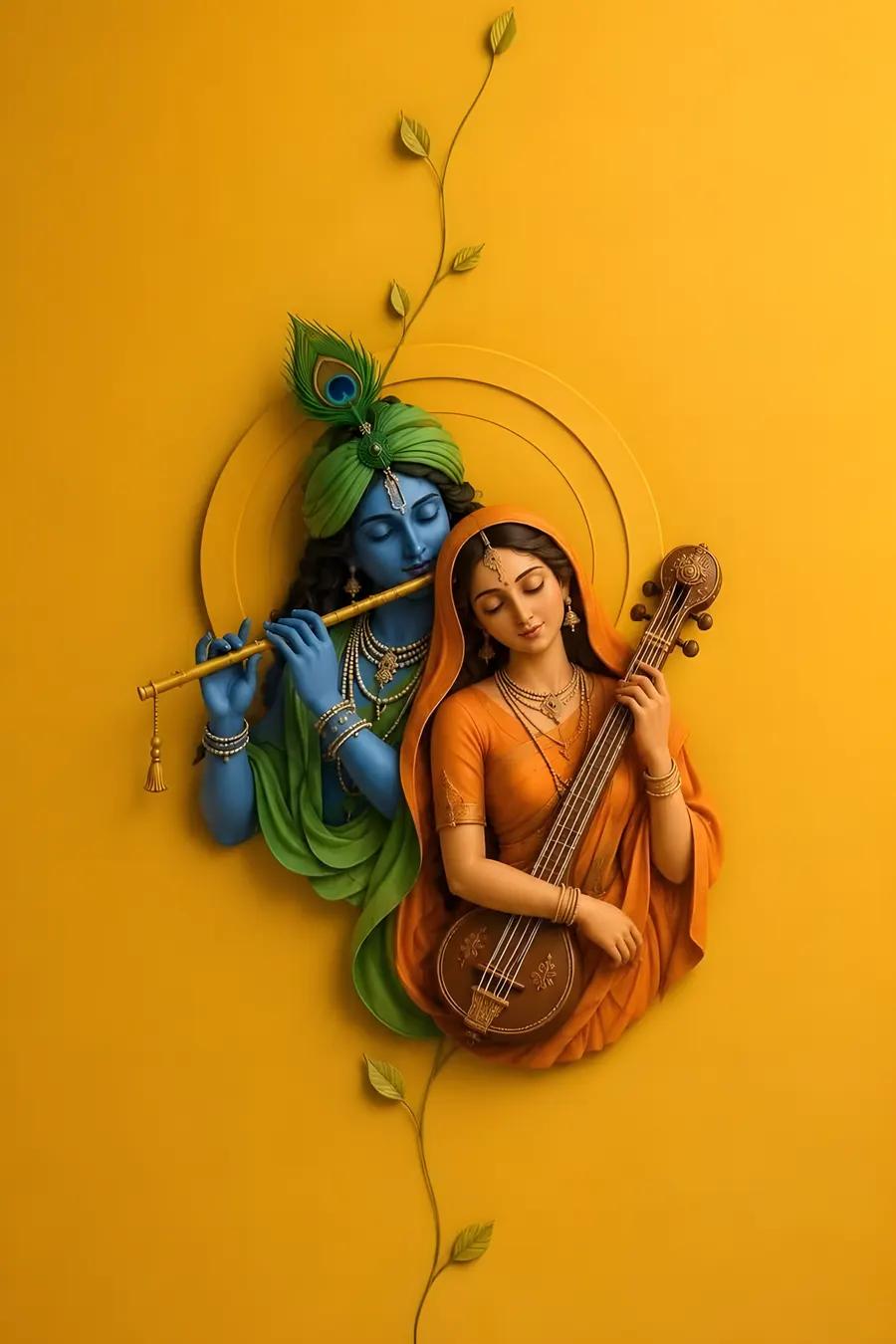
The flute and the veena appearing together is a specific and lovely detail: two instruments in one frame, which is a way of drawing a duet without drawing sound. The river is almost always the Yamuna. Blue and gold against green is the standard palette, Krishna rendered in blue and Radha in warm gold or saffron, and the contrast is doing theological work as much as visual work.
Placing them
Bedrooms and entrance halls, by convention and by good sense — these are warm, close, affectionate pictures and they suit a room you are relaxed in.
Above a bedhead is the most common placement, and it wants a piece wide enough to relate to the bed: roughly two-thirds the width of the bedhead is the usual guide. If the wall will not take that, a tall portrait beside the bed works better than a small piece centred above it.
They pair naturally with anything else warm in the room — brass, carved timber, terracotta — and less well with cool greys.