Collection
Optical Illusion Wall Art
Images that will not sit still while you look at them
6 pieces in this collection
About Optical Illusion Wall Art
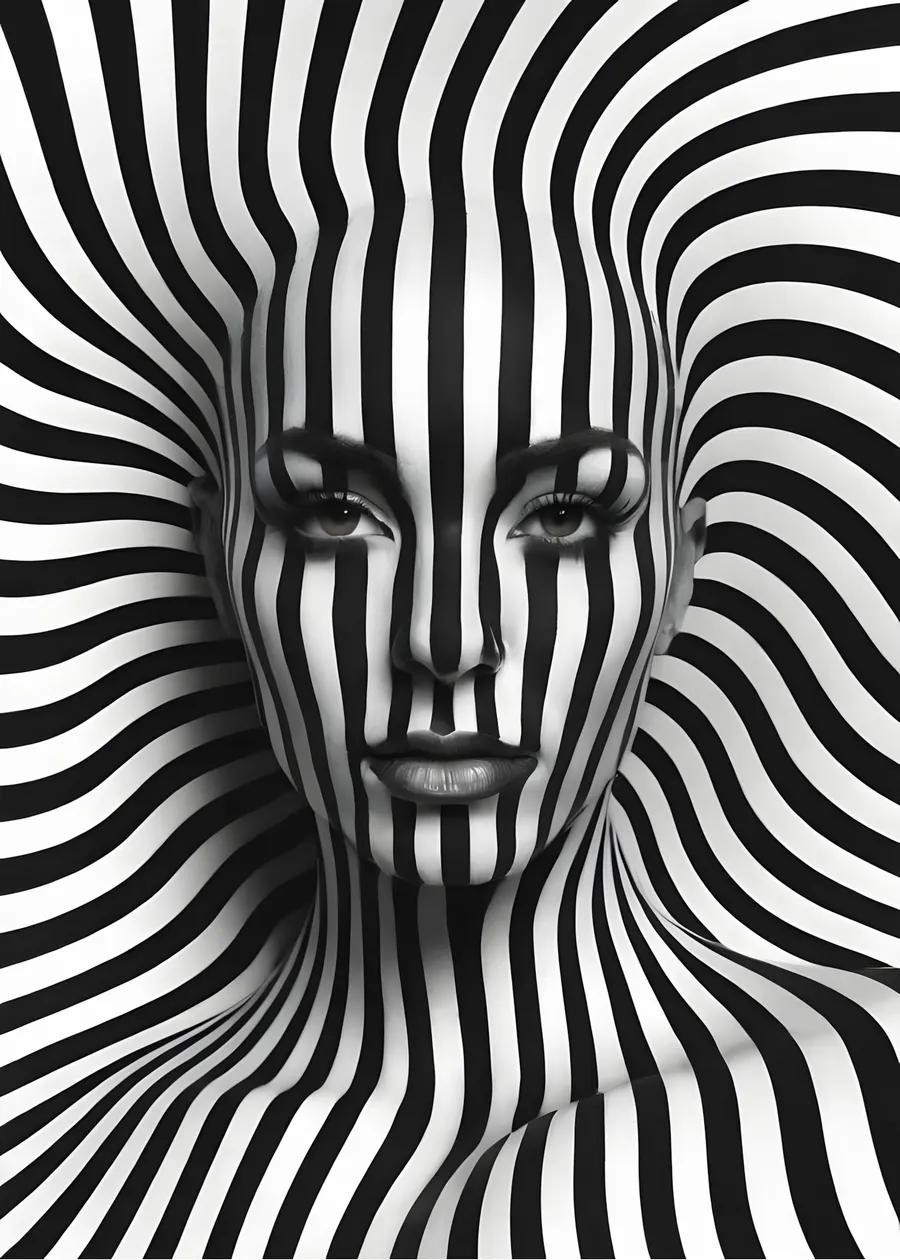
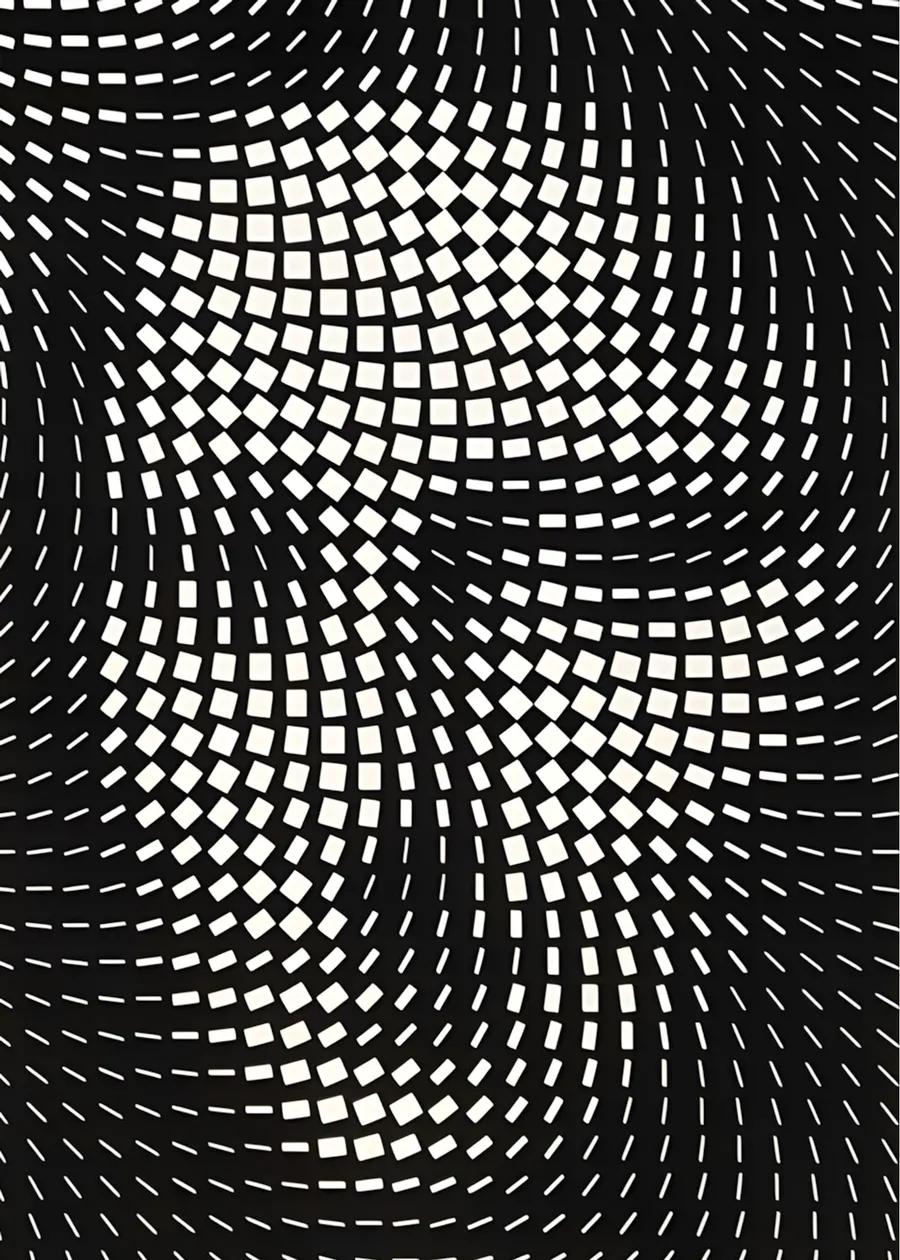
Op art is the only genre here that is doing something to your eyes rather than to the wall. The stripes are straight; the grid is regular; nothing in the image actually moves. The apparent motion is manufactured in your visual system, which is why a photograph of one of these pieces never quite conveys it and why standing in front of one is a slightly different experience each time.
How the effect is built
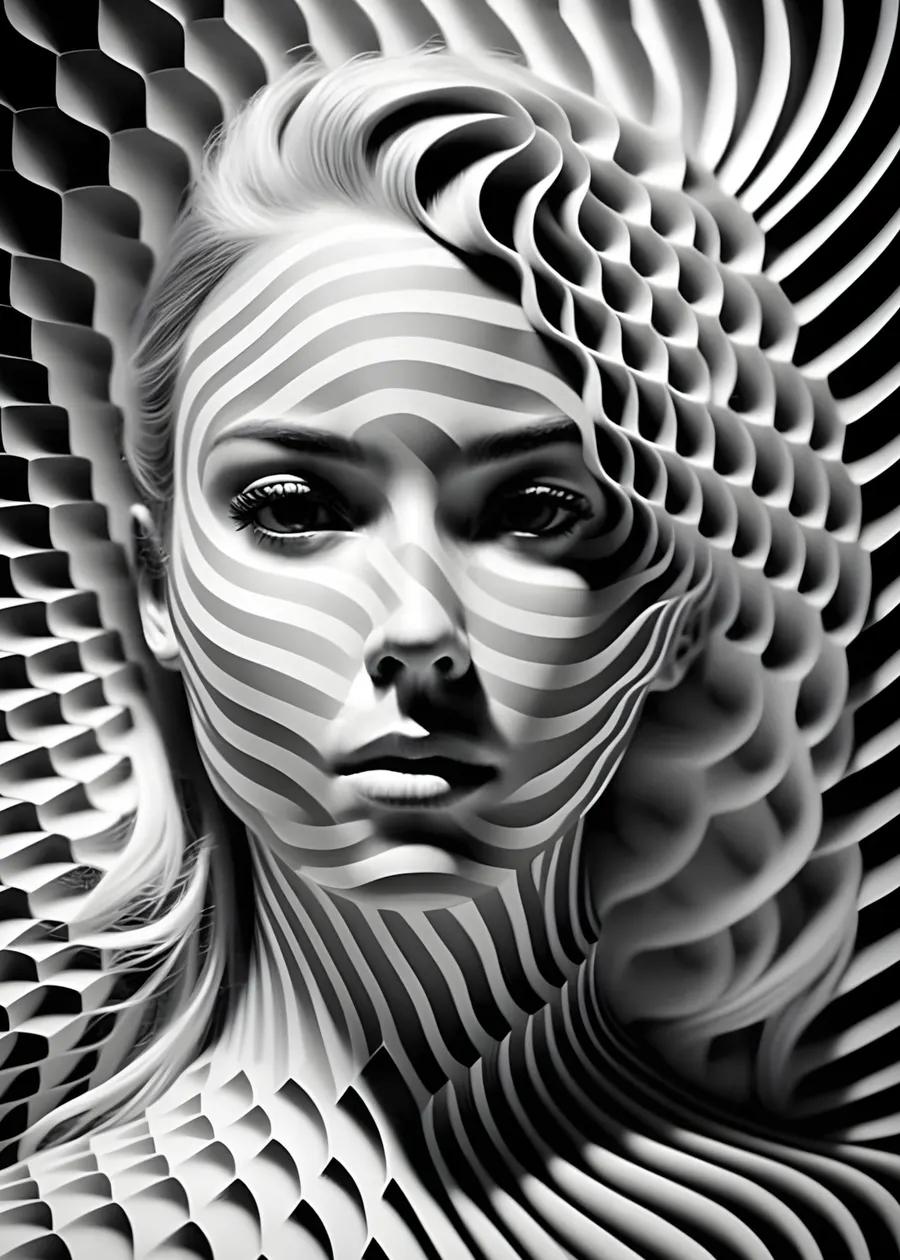
Two ways, mostly. High-frequency stripes of near-equal weight, which the eye cannot settle on and so keeps re-focusing — that is where the shimmer comes from. And a regular grid deliberately distorted in one region, so the brain reads the distortion as depth and the flat surface appears to bulge or recede.
The face pieces combine both: a portrait that only becomes a portrait because the stripes bend around where the features would be. There is no outline anywhere in the image.
Where it works, and where it really does not
It works in rooms you move through. A hallway, a stairwell, a landing — anywhere the viewing angle changes as you pass, because the effect depends on movement. In those spaces op art earns its keep better than any other genre.
It does not work where somebody has to sit and look at it for an hour. The same shimmer that is arresting in a corridor is genuinely tiring in a study, and it is a poor choice above a bed for obvious reasons.
Scale and surroundings
Big. The effect scales with the number of visible repetitions, so a small op art print is a substantially weaker version of the same image.
And alone. This is the least companionable art in the shop — two op art pieces on one wall cancel each other out, and one next to anything patterned turns the whole wall into noise. Plain wall, nothing else on it, and space either side.