Collection
Krishna Wall Art
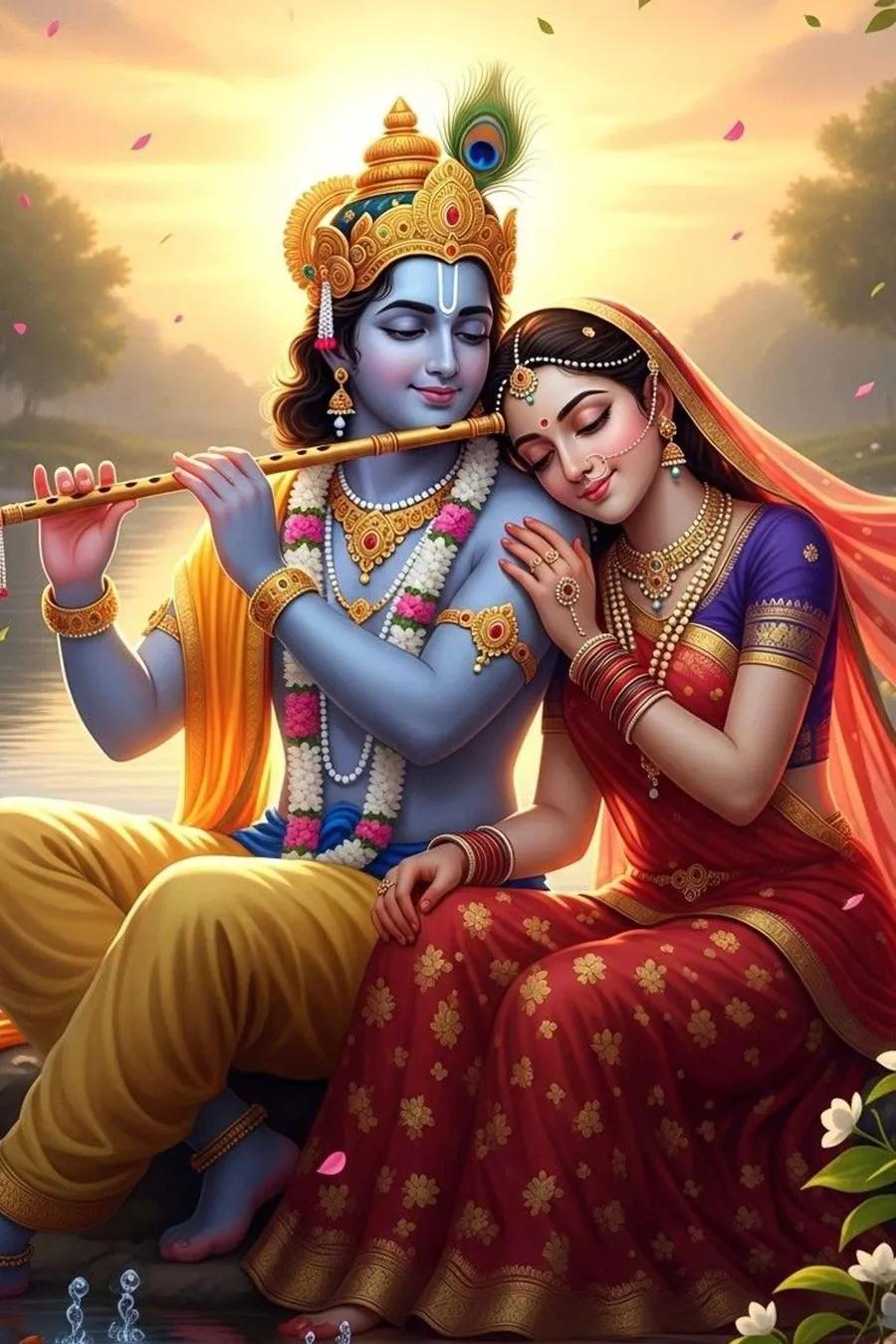
The flute player, the cowherd of Vrindavan, and Radha beside him
35 pieces in this collection






About Krishna Wall Art
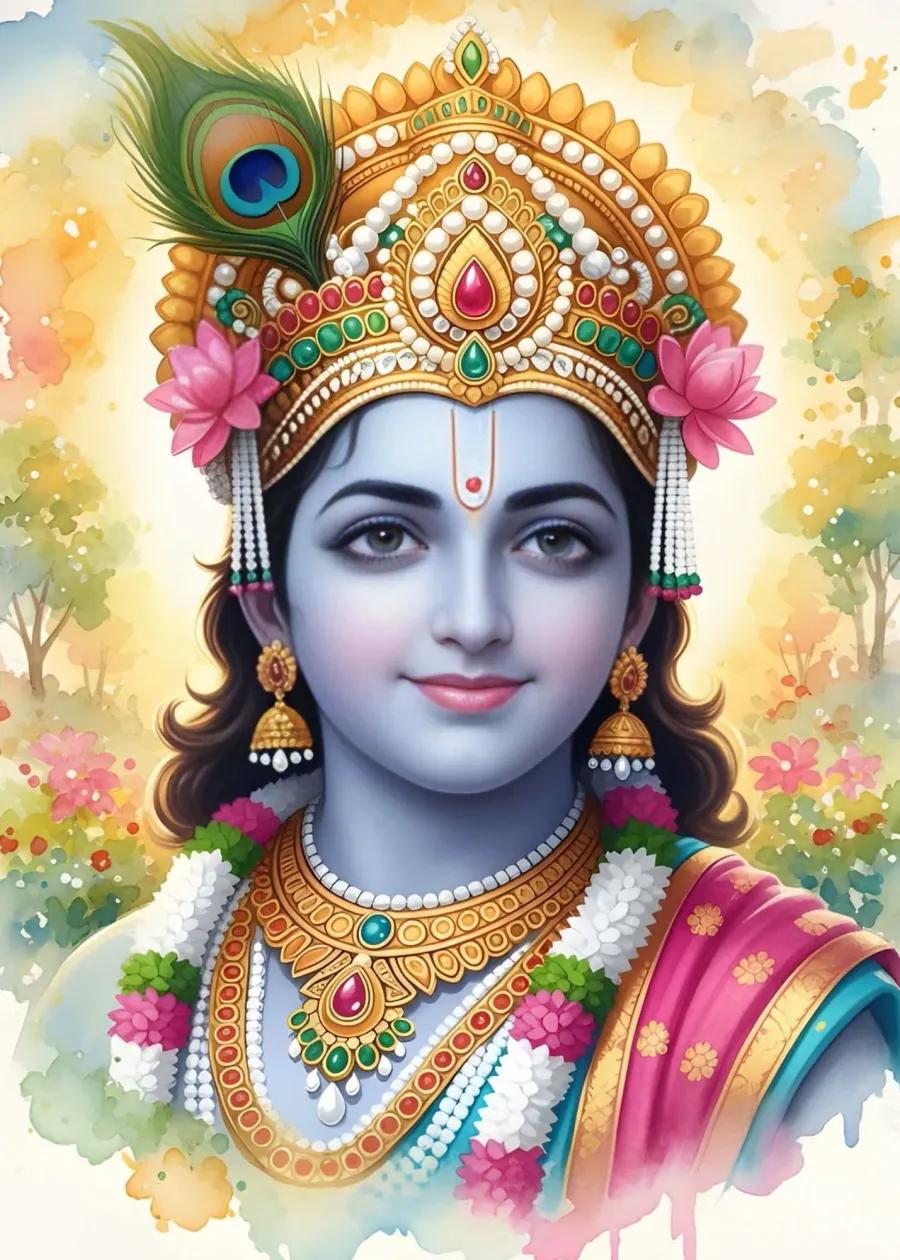
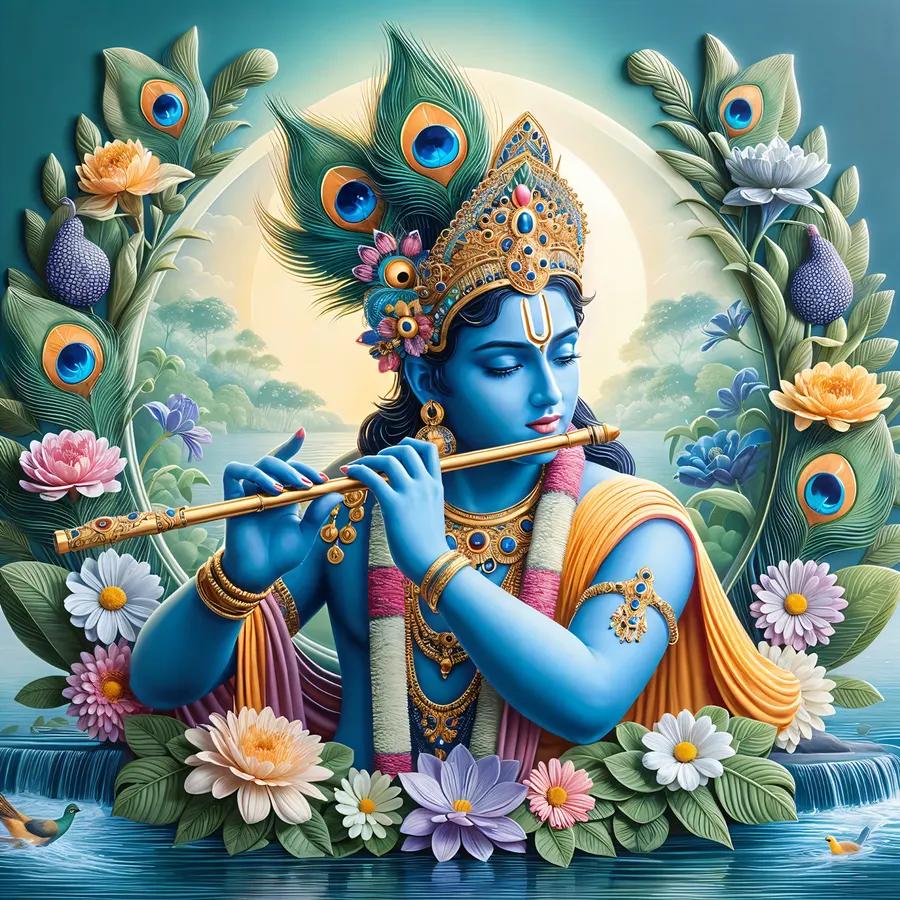
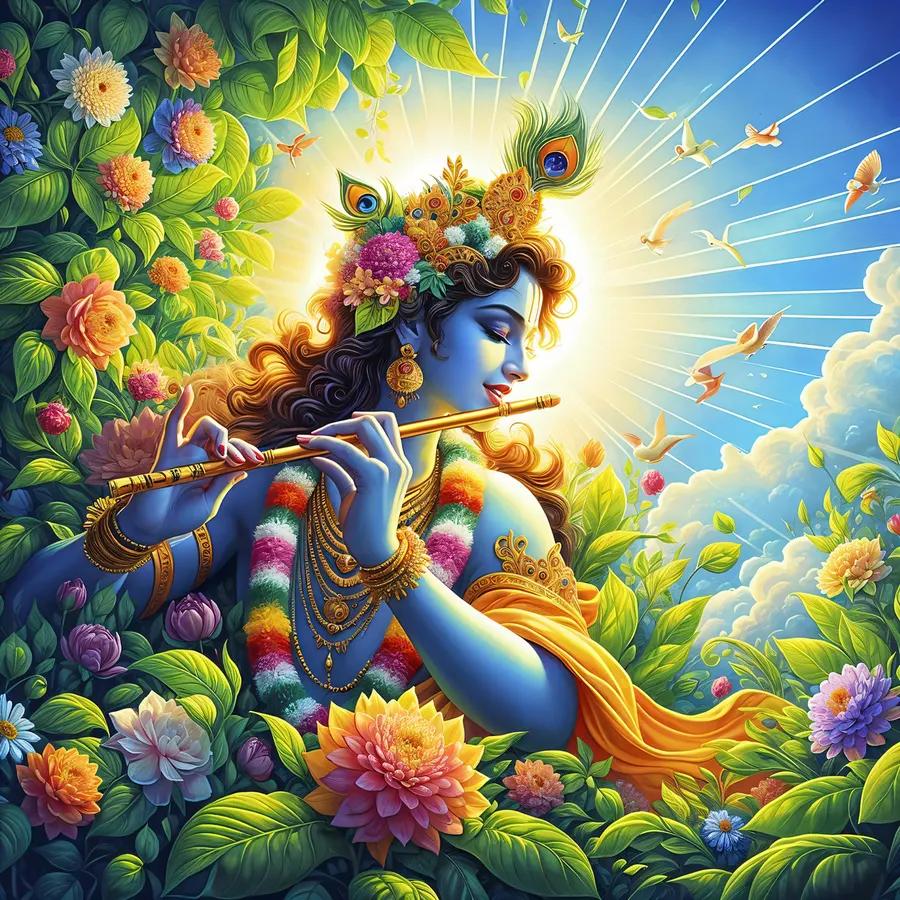
Krishna is the most widely loved of the Hindu deities, and the one most often kept where a family gathers rather than only where it prays. He appears as the cowherd of Vrindavan, as the flute player whose music draws the whole forest to listen, and as the charioteer who speaks the Bhagavad Gita on the field at Kurukshetra. A single image can carry any of those.
What the imagery is saying
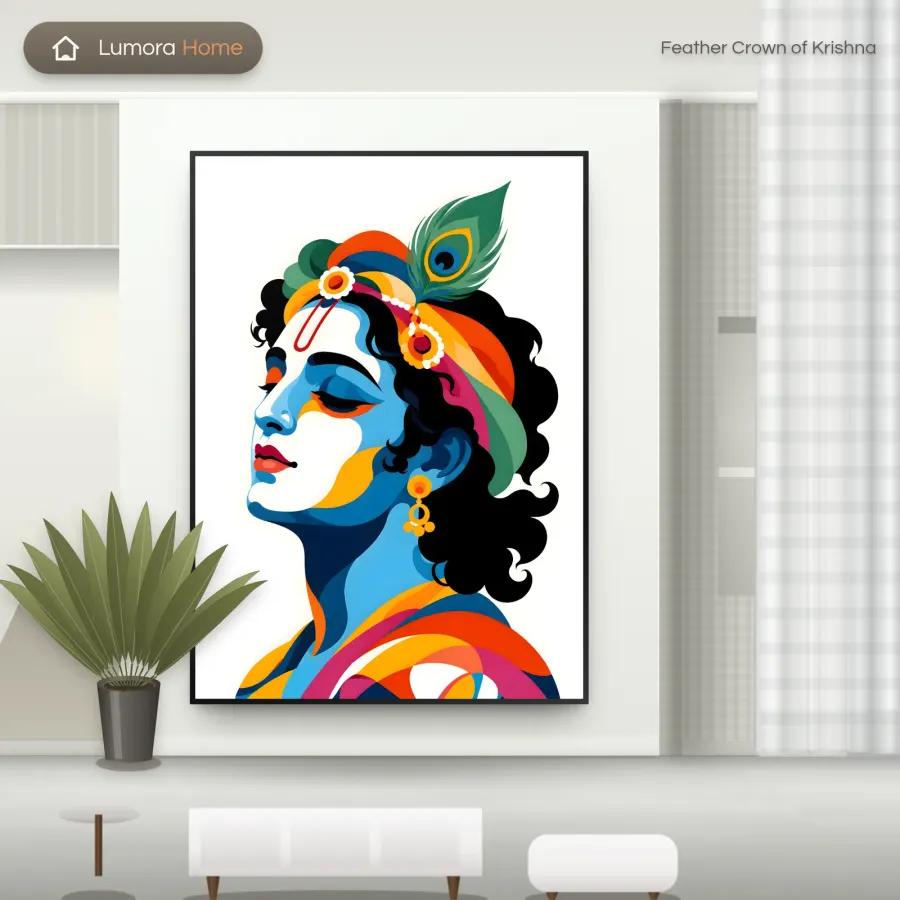
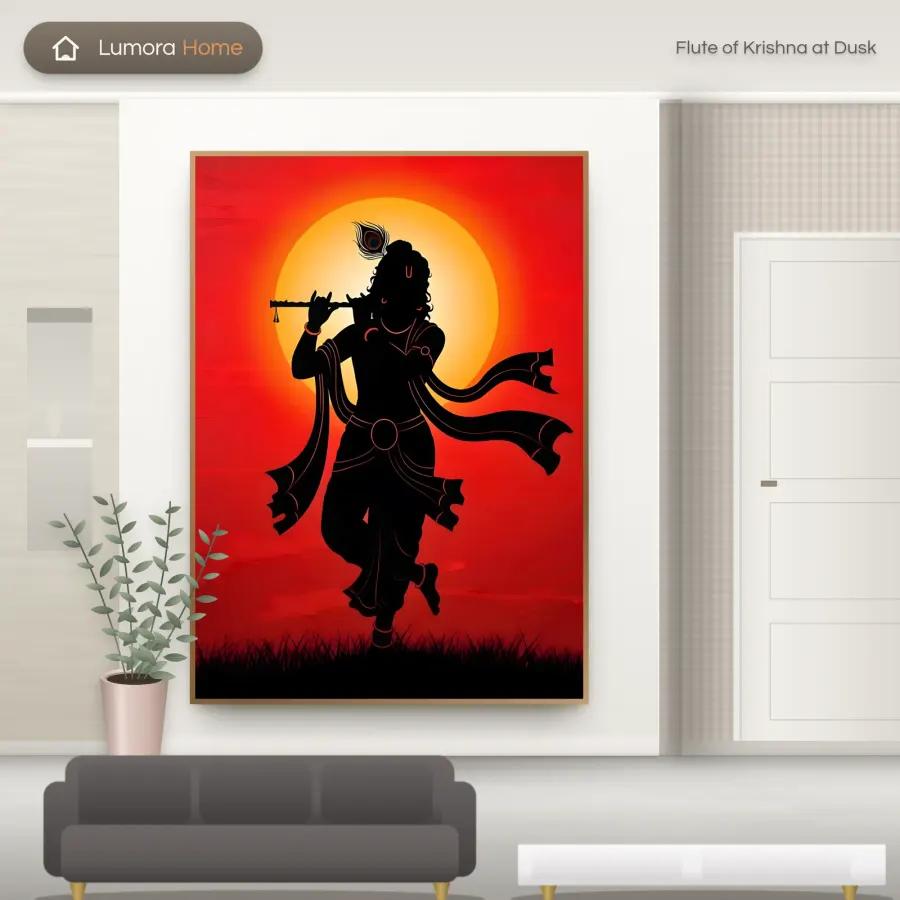
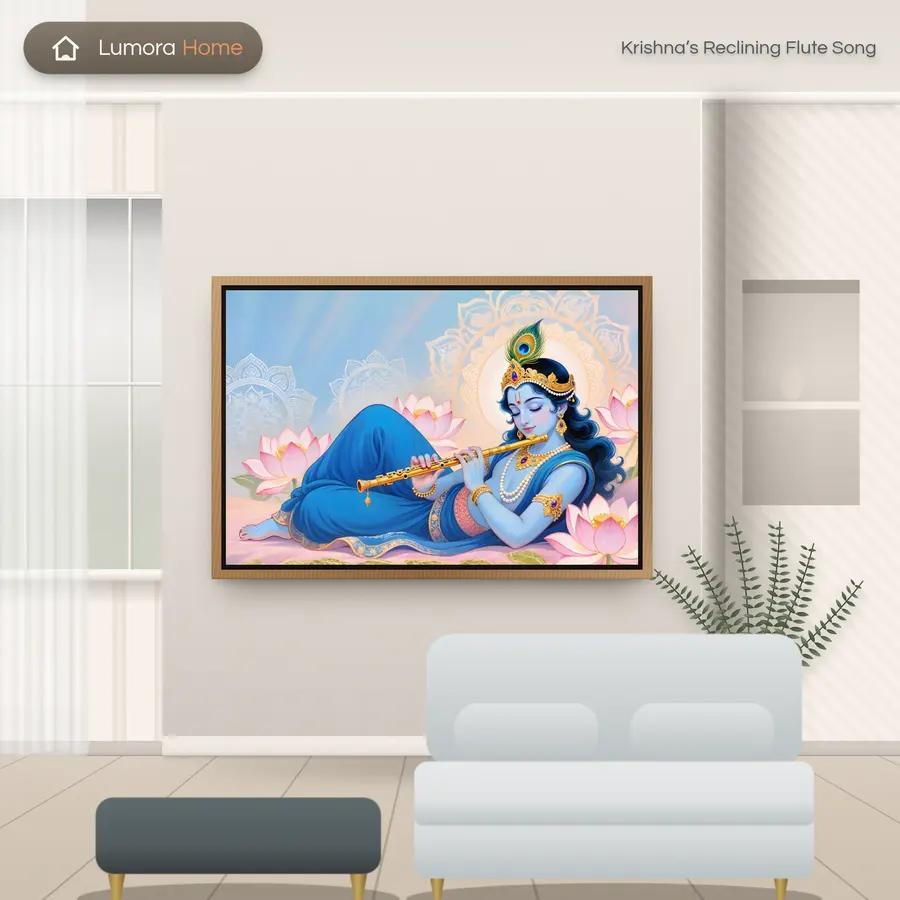
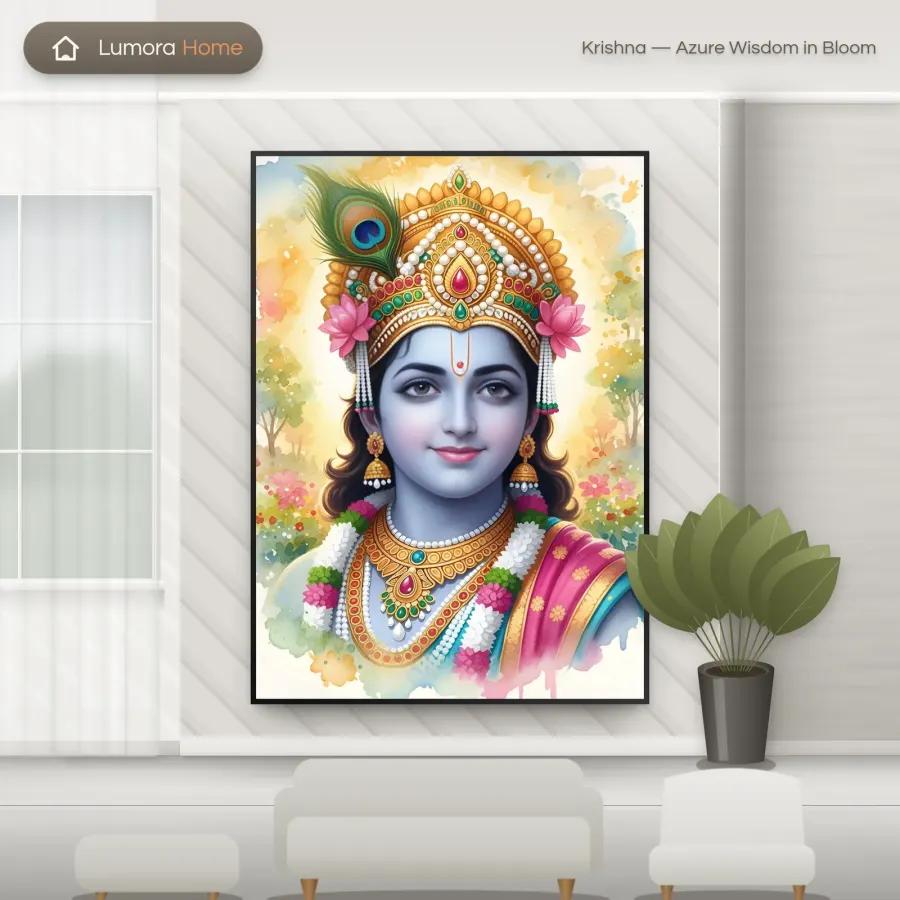
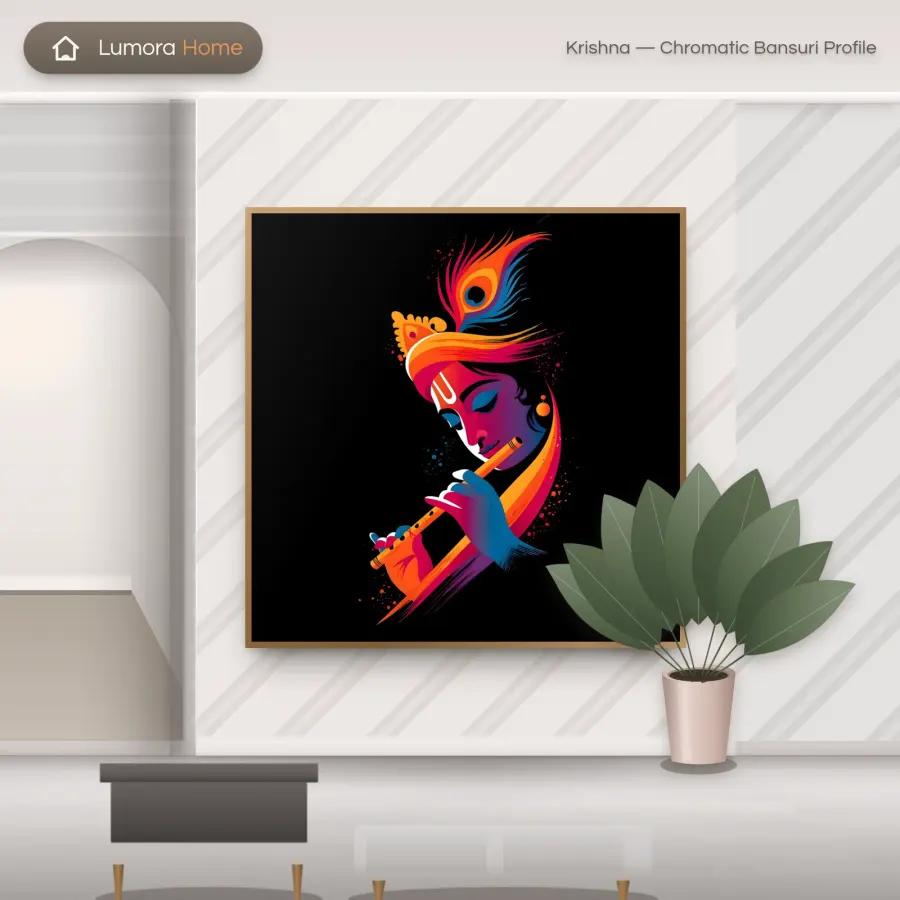
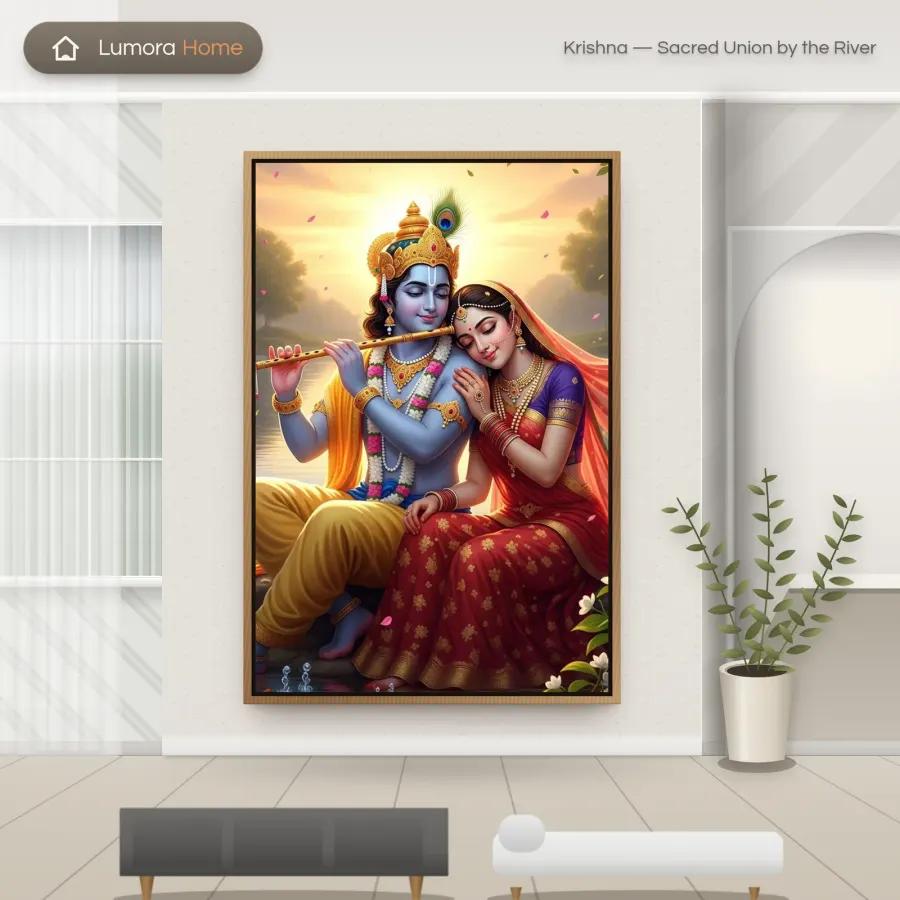
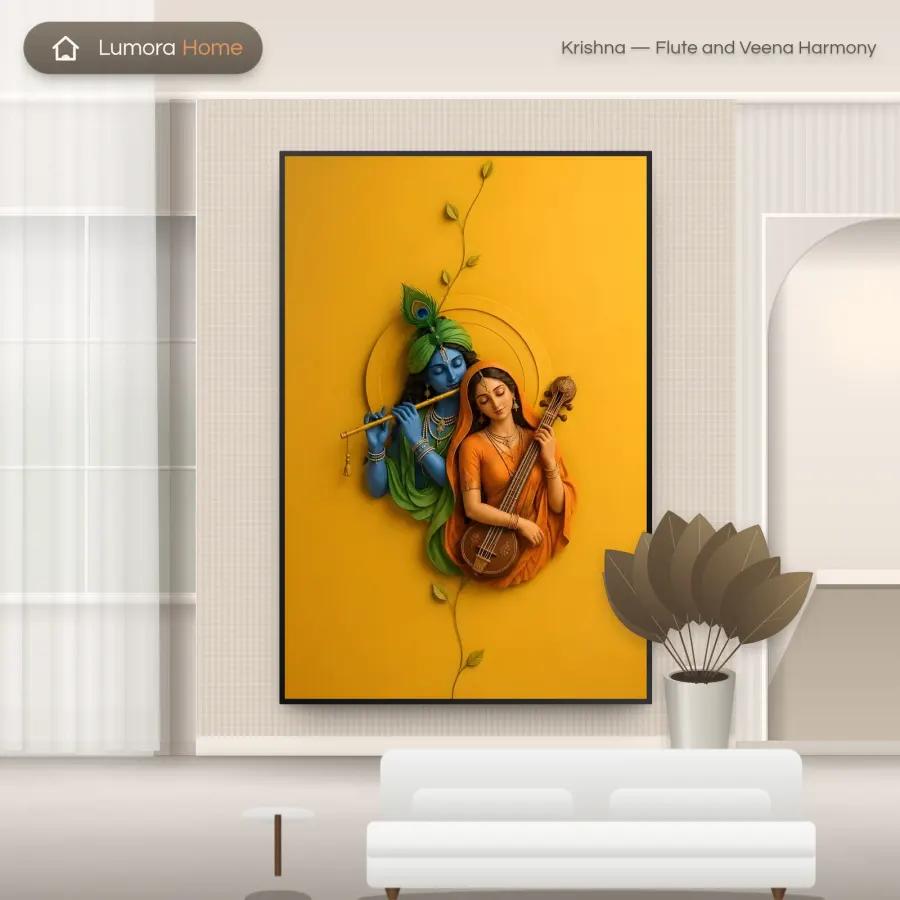
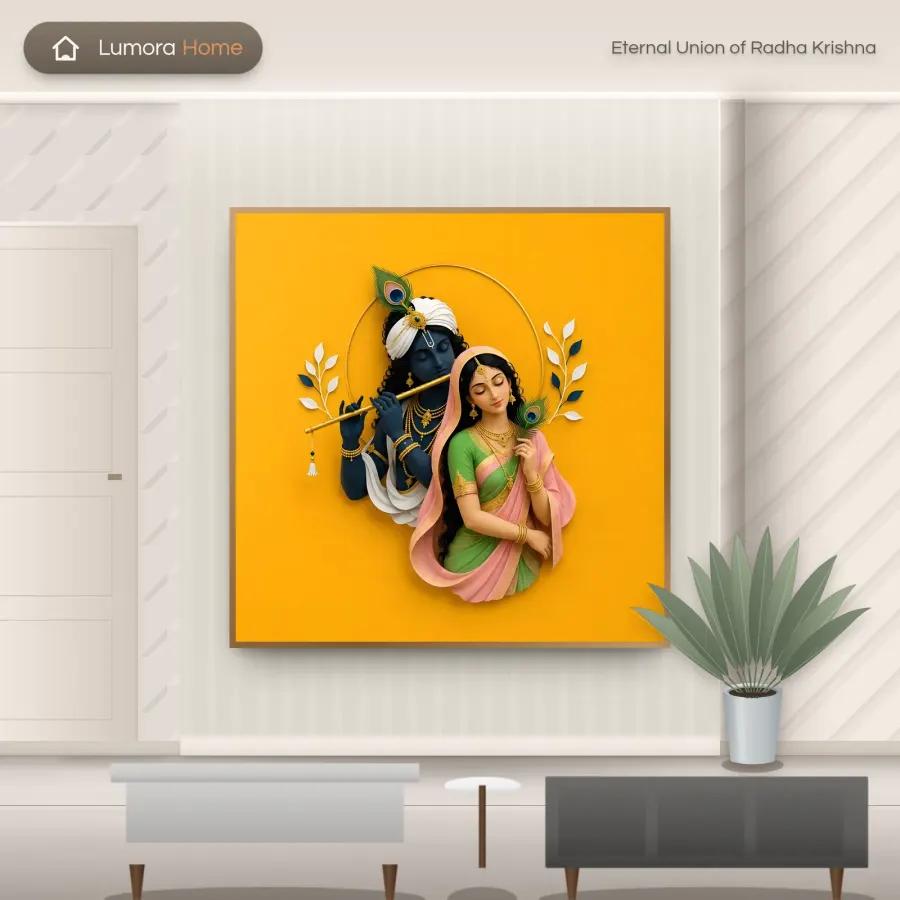
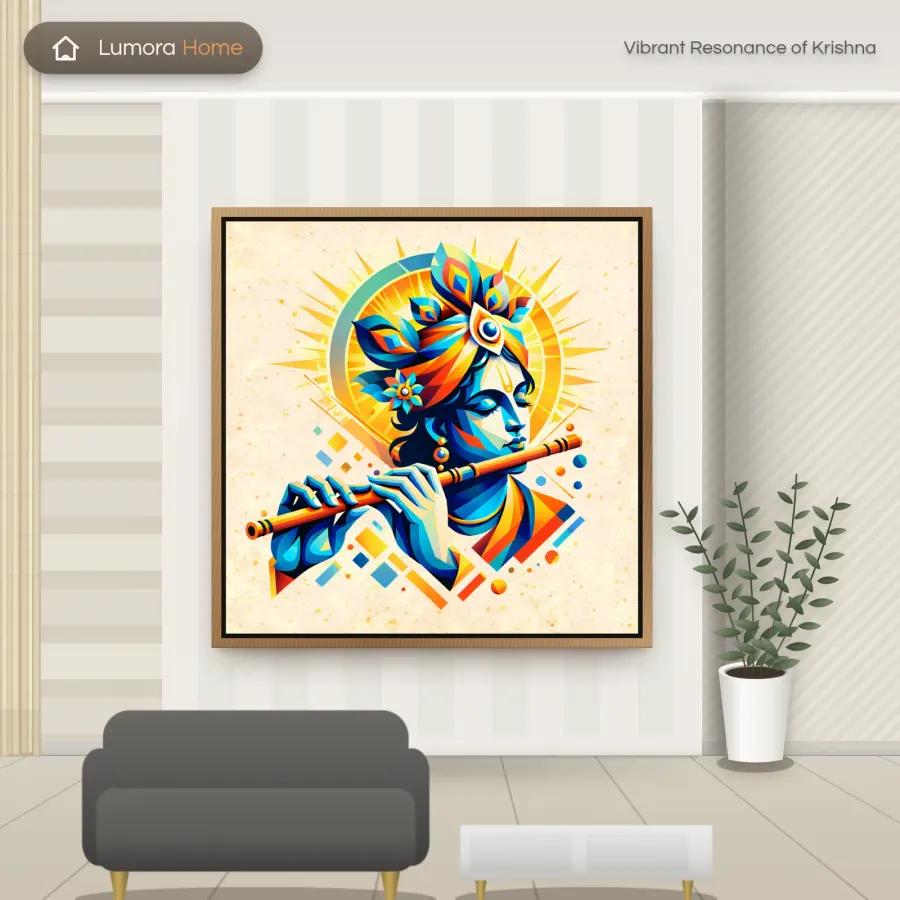
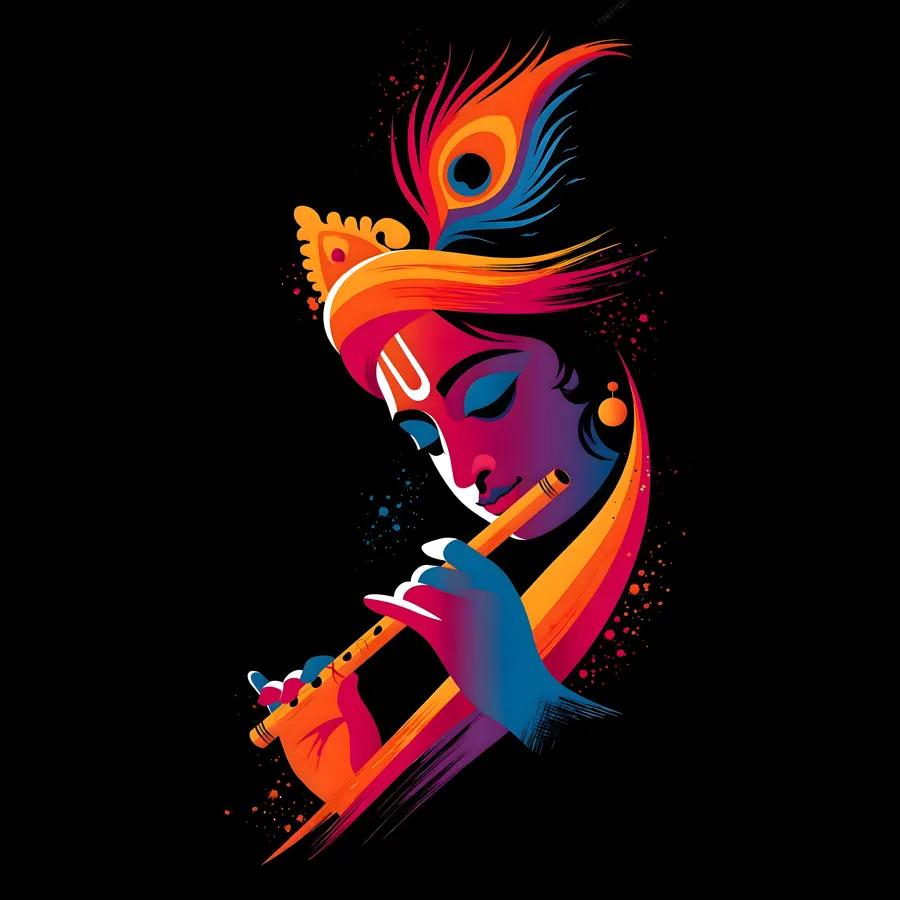
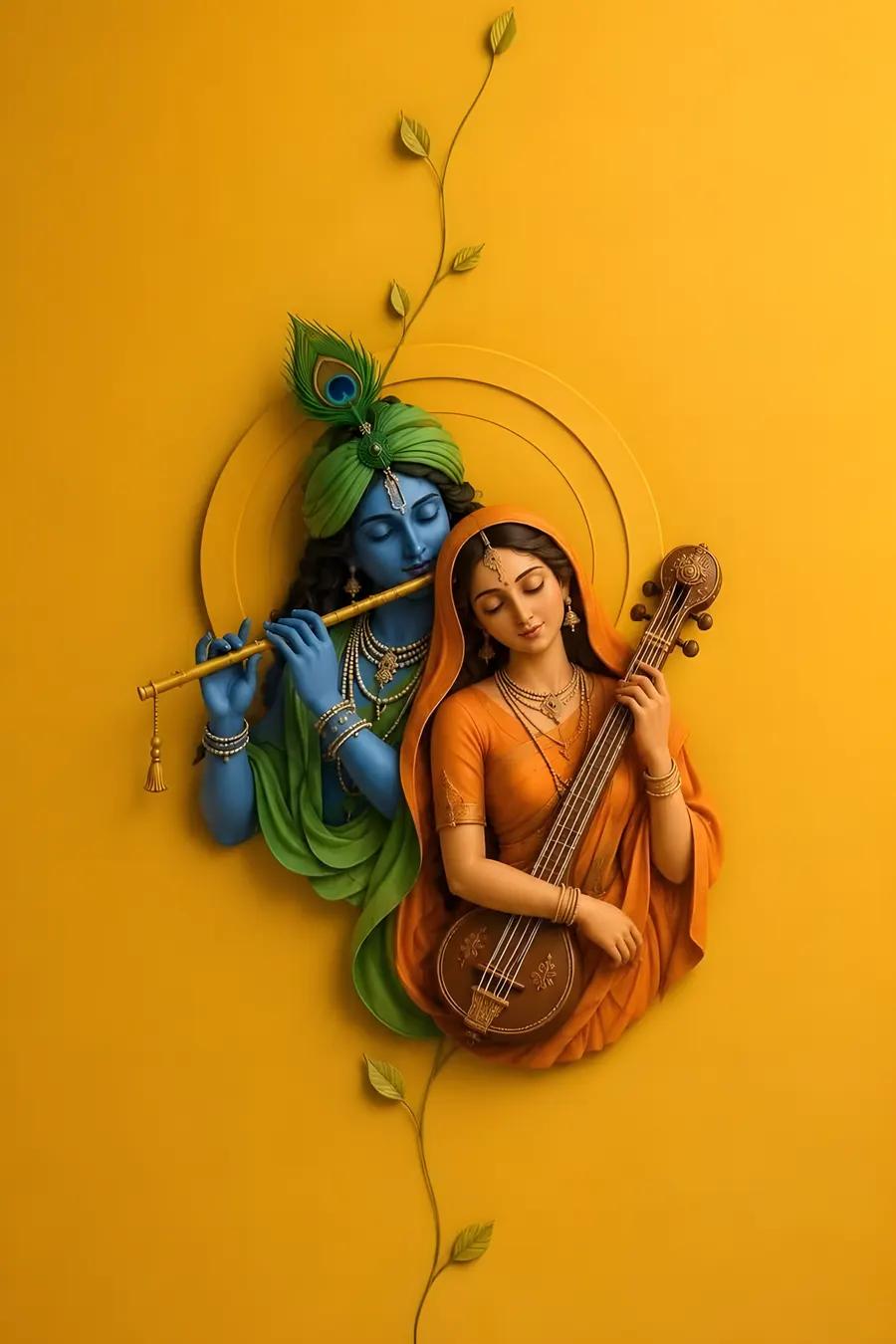
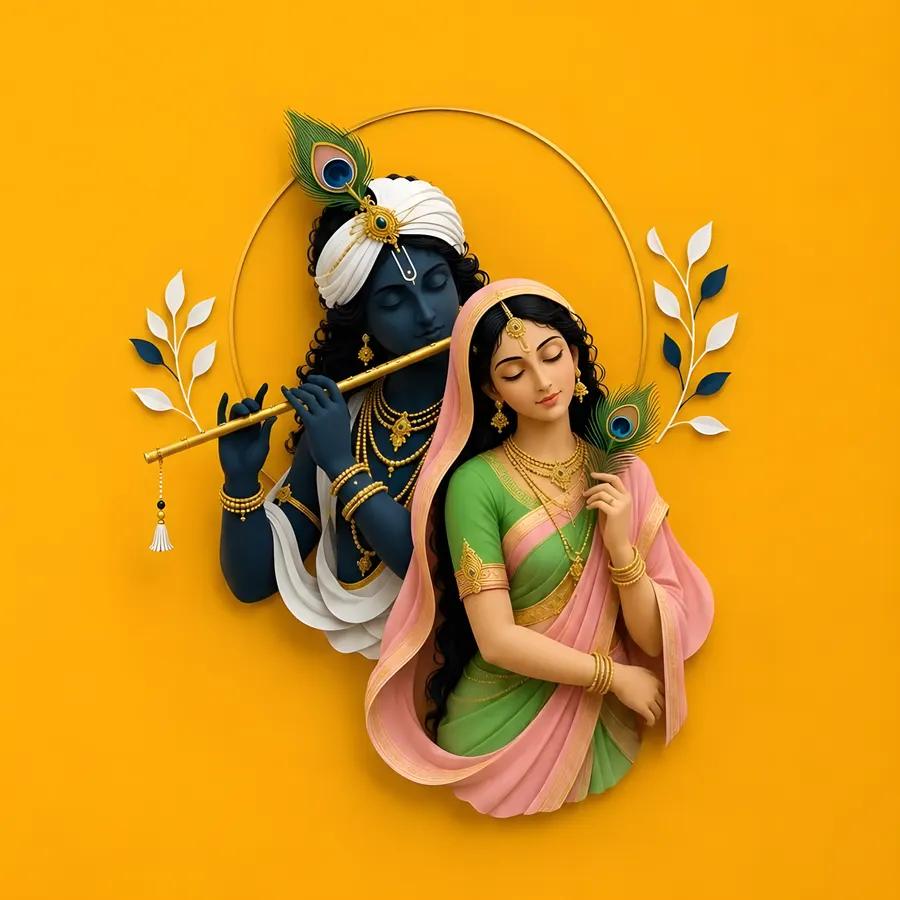
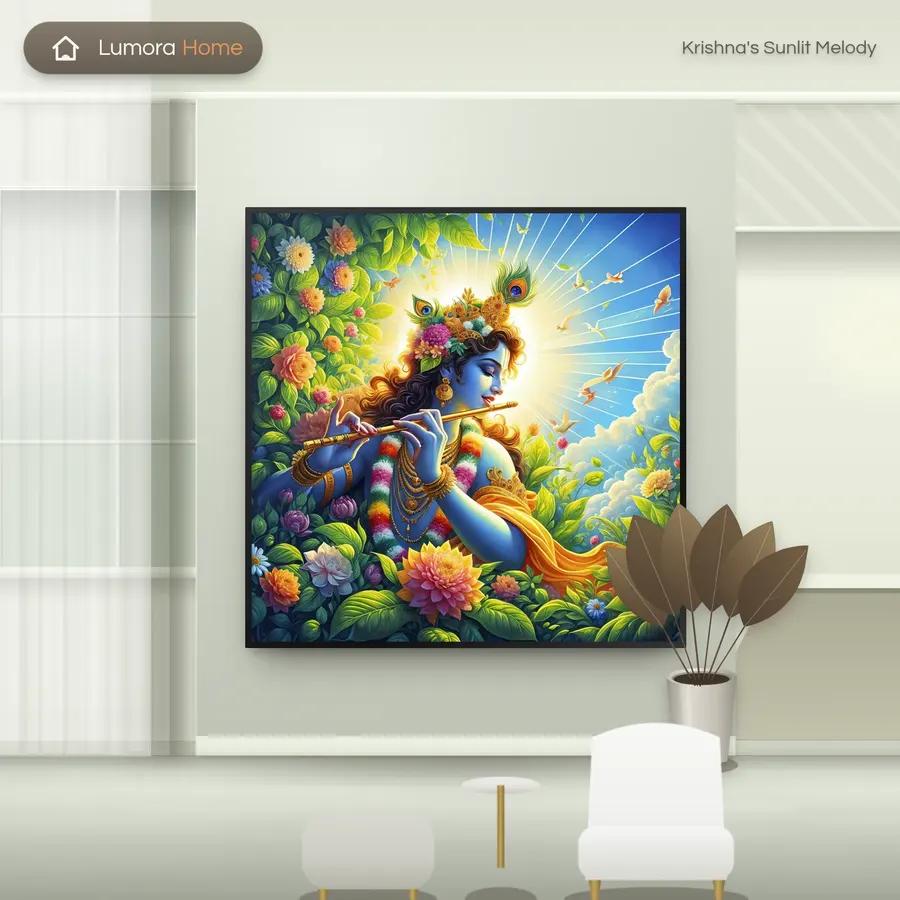
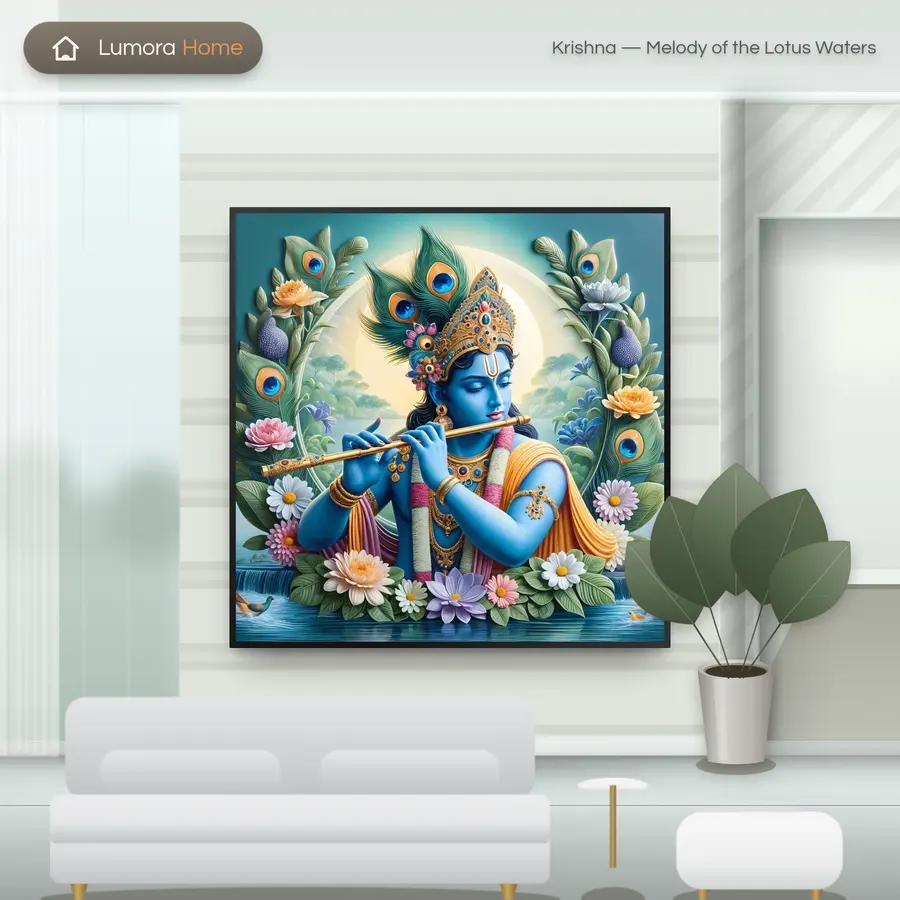
The flute — the bansuri — is the detail almost every depiction keeps. It stands for a call that cannot be refused, and it is why so much Krishna art is full of movement even when the figure is still: peacocks turning, cattle lifting their heads, water rippling. His blue skin is not a literal colour but a way of showing something limitless, the same way a painter uses gold for holiness. When Radha appears beside him the subject shifts from divinity to devotion — the two are read as one, which is why so many couples choose a Radha Krishna piece for a bedroom or an entry where guests are received.
The peacock feather, the lotus and the river are the other three you will keep noticing. Each is doing a job: the feather marks him as a forest god, the lotus places him in the sacred, and the river is the Yamuna, where most of the stories happen.
Where it sits in a room
Krishna pieces tend to be warm — ochre, saffron, deep indigo, gold leaf — so they do their best work on a wall that gets some real light during the day. An east-facing wall is the traditional choice for a devotional image in Indian homes, and it happens to suit the palette too.
They are also unusually easy to place. A single tall portrait works beside a doorway or above a console where a wider piece would not fit. A pair reads well over a bed or a sofa, hung close enough to be one composition rather than two pictures. If you already have brass, carved wood or terracotta in the room, this is the subject that ties them together.
Choosing between them
For a puja space or a shrine corner, the more traditional front-facing depictions sit most comfortably. For a living room, the abstract and contemporary treatments — line work, colour fields, a profile rather than a full figure — carry the same subject without asking the room to become devotional. Both are Krishna; they are simply pitched at different walls.
Read About Krishna
- SubjectKrishna and Radha in Art: What the Flute, the Feather and the River MeanAlmost every depiction of Krishna keeps the same handful of details. Here is what the bansuri, the peacock feather, the lotus and the blue skin are actually saying — and how the meaning changes the moment Radha appears beside him.6 min read
- SubjectHow to Identify Hindu Deities in Art: A Short Visual GuideHindu art identifies a deity by what they hold and what stands beside them, not by their face. Learn six or seven attributes and almost any devotional painting becomes readable — including the very abstract modern ones.6 min read