Collection
Daisy Wall Art
Cheerful without being naive
4 pieces in this collection
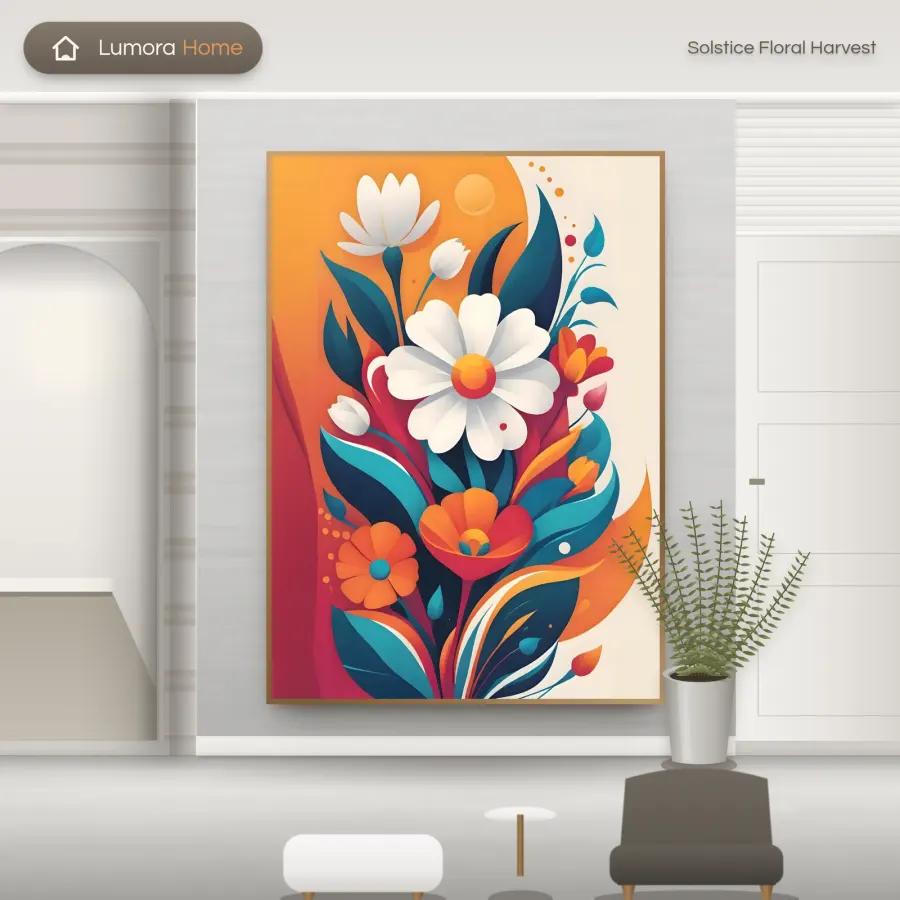
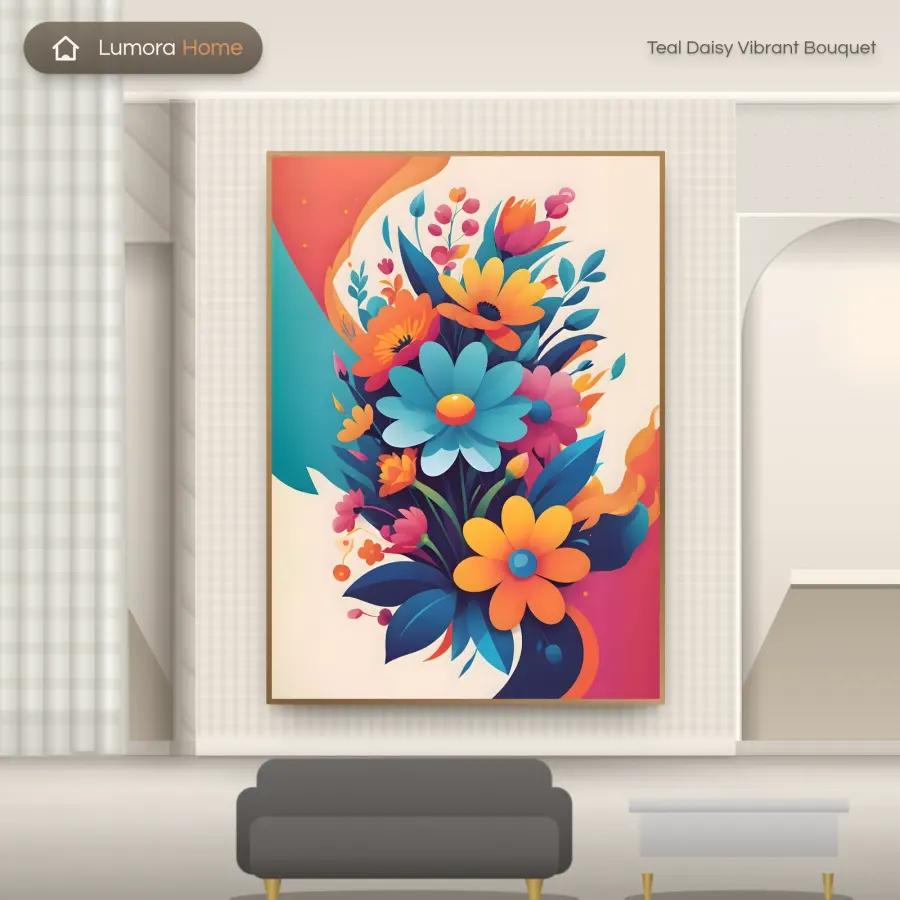


About Daisy Wall Art
The daisy is the least pretentious flower in art and it is doing something none of the others manage: it is cheerful without being twee. A rose carries romance, a lily carries ceremony, an orchid carries expense. A daisy carries nothing at all except the fact that it is open, symmetrical and white with a yellow middle — and that simplicity is why it reads as genuinely light-hearted rather than as sentimental.
Why it works so well in flat illustration
Because a daisy is already a diagram. Radial petals of even length around a circular centre — draw it flat, with no shading whatsoever, and it is still perfectly legible. That makes it the ideal subject for the bold hard-edged illustration style that most of these pieces use: saturated grounds, white petals, a hot orange or red centre doing all the work.
Almost no other flower survives that treatment as well. A rose flattened to shapes stops being a rose.
Where it belongs
Kitchens, children's rooms, laundries, breakfast nooks, and any room that is slightly too serious for its own good. These are pieces that improve the temperature of a space, which is a real and underrated function.
They are the wrong choice for a formal dining room or a room that is deliberately restrained. A daisy in a very controlled interior looks like it wandered in.
The palettes
Most of these are high-contrast: white bloom against saturated teal, coral or ochre. That is a lot of colour, so the wall behind should be plain, and the room can take exactly one of them.
Scale and grouping
Medium is right. Small daisy prints read as decoration rather than art, and very large ones can tip into looking like wallpaper, since the shape is so regular.
Pairs work better than threes here, oddly — the radial symmetry means three in a row starts to look like a repeating pattern rather than a set of pictures.
They pair naturally with the tulip and bouquet pieces, which share the same flat illustration language, and poorly with soft botanical studies, which come from an entirely different world.