Collection
Black and White Wall Art
No colour to hide behind — contrast, shape and tone
6 pieces in this collection


About Black and White Wall Art
Removing colour removes the easiest way to make a picture interesting, which is why monochrome work is either very good or very obviously not. What is left is contrast, shape and tone, and a piece that relies on none of those has nowhere to hide.
Why people choose it
Usually because the room is already decided. A space with a strong palette — a green kitchen, a terracotta hallway, a room with a patterned rug doing the talking — does not need another colour introduced, and a monochrome piece adds composition without adding an argument.
The second reason is coherence. Three or four black-and-white pieces will hang together as a gallery wall regardless of subject, because the shared absence of colour is a stronger unifier than any palette. The same four pieces in colour would need real curating.
What is here
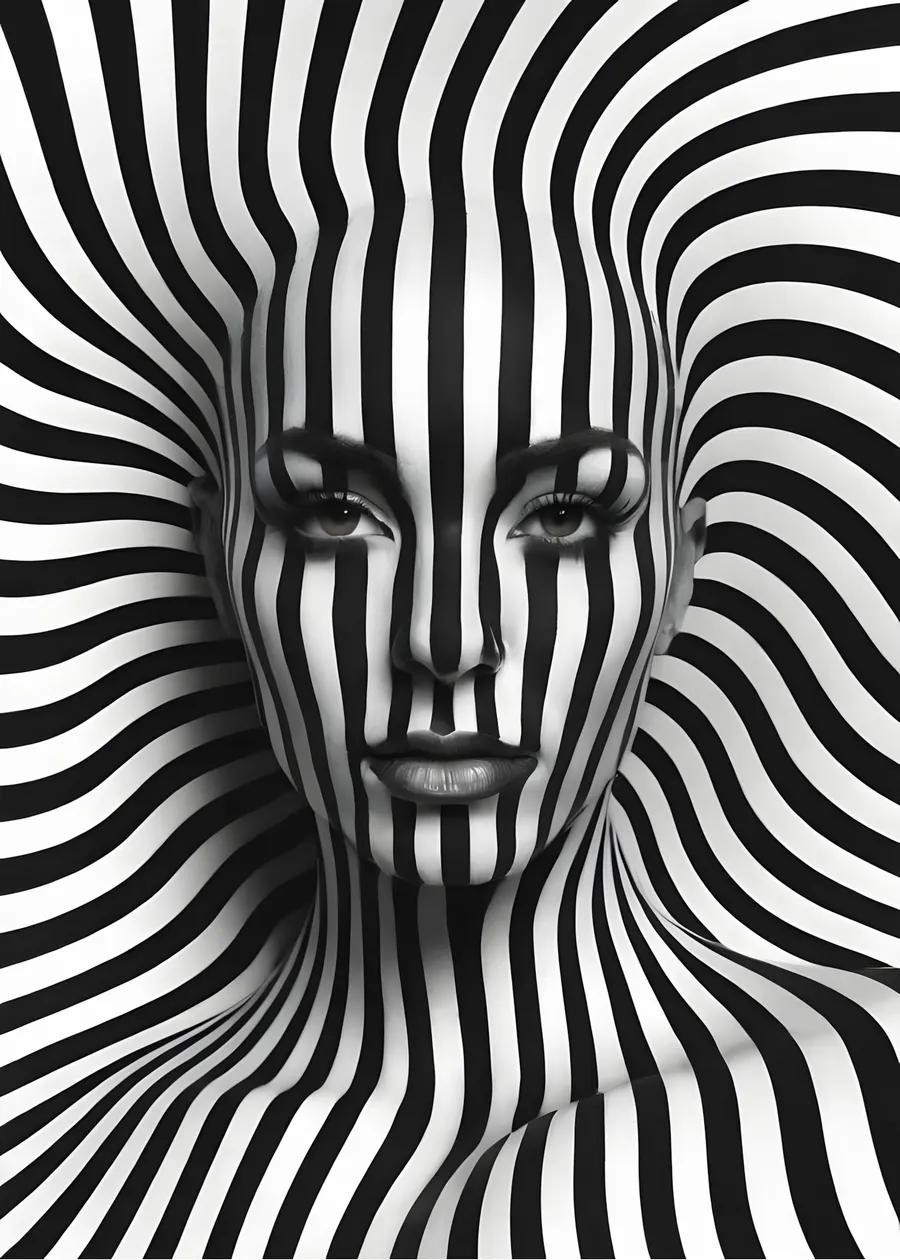
The op-art work is the loudest: faces built out of black and white stripes that distort as they cross the features, so the portrait emerges from the pattern rather than being drawn. High contrast, high impact, and dominant on any wall they are on.
The monochrome portraits and cubist studies are quieter — greys doing most of the work, with black reserved for the edges. These are the ones that live comfortably in a bedroom.
The one technical thing worth knowing
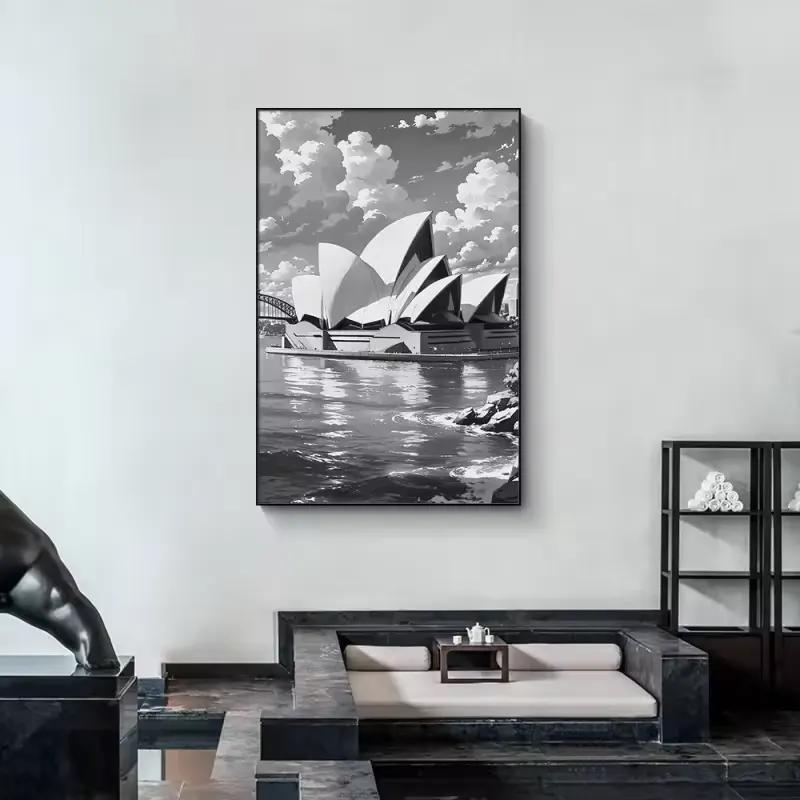
Monochrome shows framing and lighting mistakes more than colour does. A warm-toned light on a black-and-white print makes the whites look dirty, and a cheap frame in the wrong black reads immediately. Cool or neutral light, and a frame that either matches the deepest black in the image or disappears against the wall.
Placing them
They are the most forgiving subject for a gallery wall and the least forgiving for a careless hang — straight lines in the image make a crooked frame obvious. Measure it.
And give the high-contrast pieces room. An op-art face next to anything patterned is two competing grids, and the wall stops being readable.